Bibim Guksu
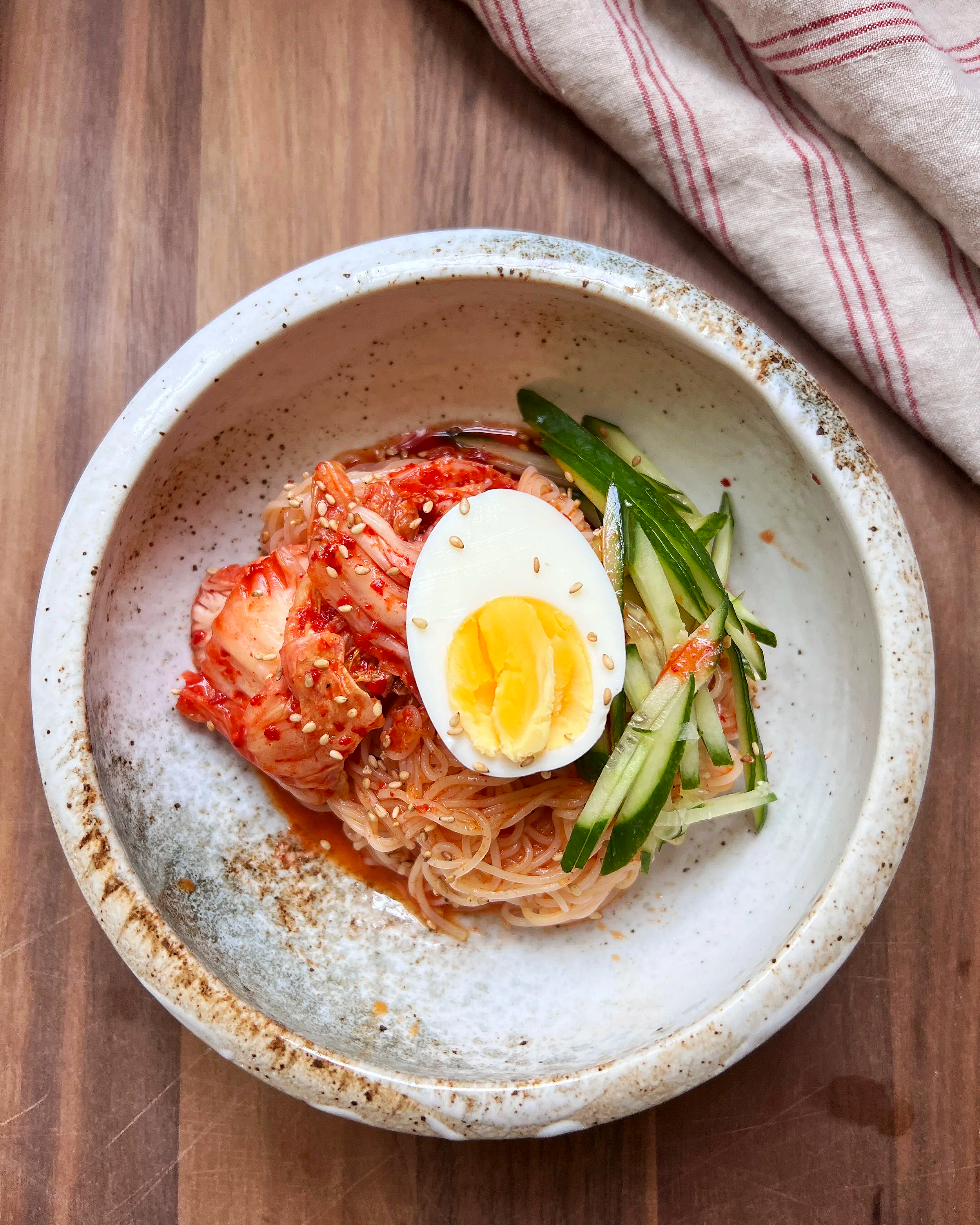
Bibim guksu is a Korean cold noodle dish tossed in a spicy gochujang based sauce. Bibim guksu literally means 'mixed noodles' in Korean, bibim meaning mixed and guksu meaning noodles. Thin wheat noodles are mixed with a spicy and tangy gochujang based sauce. You can make it super quick, with no cooking required except boiling the noodles and making a boiled egg. It's a great addition to your cooking repertoire for busy weeknights.
What is Gochujang?
Gochujang is a Korean fermented red chili paste made from gochugaru (Korean chili powder), glutinous rice, fermented soybeans, and salt. It's a spicy paste, but it's also very complex, with a slow building heat, and it's one of the building blocks of Korean cooking, showing up in everything from marinades and stews to dipping sauces like the one in bibim guksu. Its shelf life is long, so it's a must have pantry item.
Somyeon / Sōmen
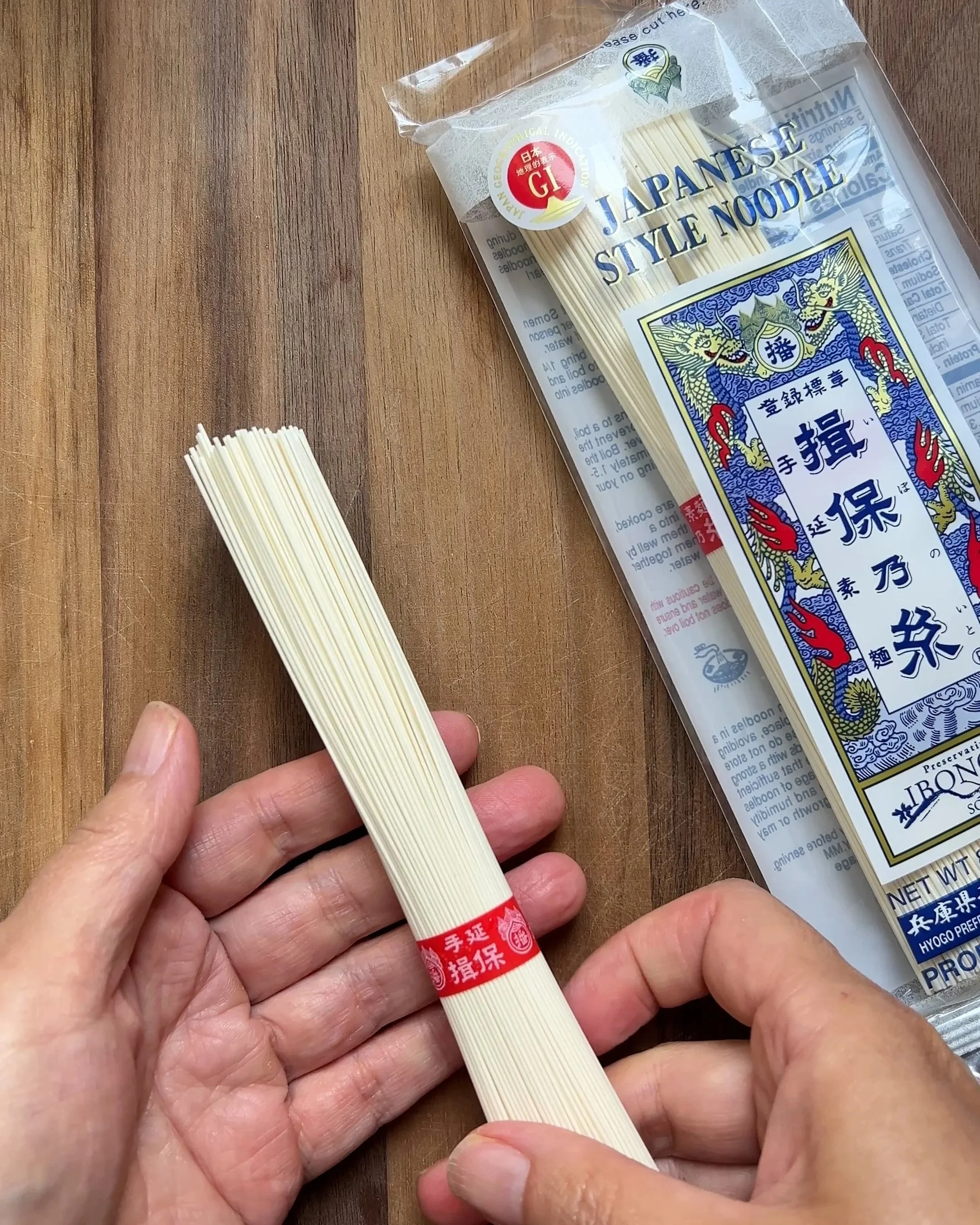
Bibim guksu typically uses somyeon, thin wheat flour noodles similar to Japanese sōmen. Somyeon and sōmen are basically the same noodle, just with a different name depending on the country. Both are thin wheat noodles, thinner than 1.3mm. Sōmen is a summer staple in Japan. It's a super thin noodle made with wheat, and since it's so thin, cooking time is only two minutes. There are many different brands, but my favorite one is called Ibonoito, and it's the brand I grew up eating since childhood.
Plum Syrup
Plum syrup is added to balance the spiciness from gochujang. Korean plum syrup, called maesil cheong, is a syrup made from unripe green plums (maesil) and sugar. The plums are layered with sugar and left to sit for a few months, and as the sugar slowly draws out the fruit's juices, it creates a syrup that's naturally sweet, tart, and floral.
It's used as an all-purpose sweetener in Korean cooking, especially in marinades, dressings, and sauces, since it does more than just add sugar's flatness. It brings a fruity, slightly sour depth that balances out spicy or salty flavors, which is exactly why it works so well in a gochujang based sauce like the one in bibim guksu.
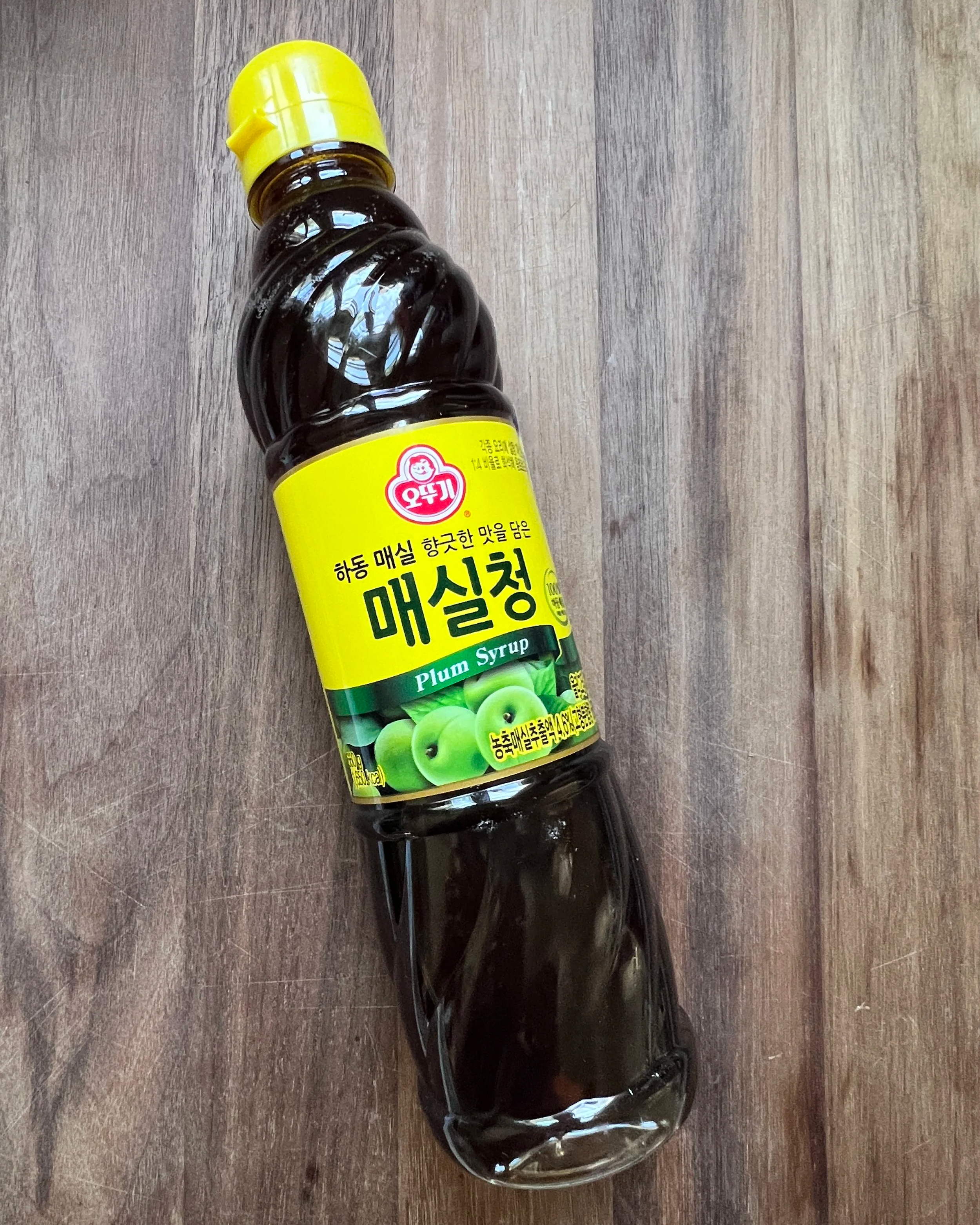
I made my own plum syrup this year, and I have a tiny bit left, so I used homemade ume syrup. If you don’t have plum syrup, you can substitute with sugar or agave syrup. But I highly recommend using plum syrupYou can find it at a Korean grocery store.
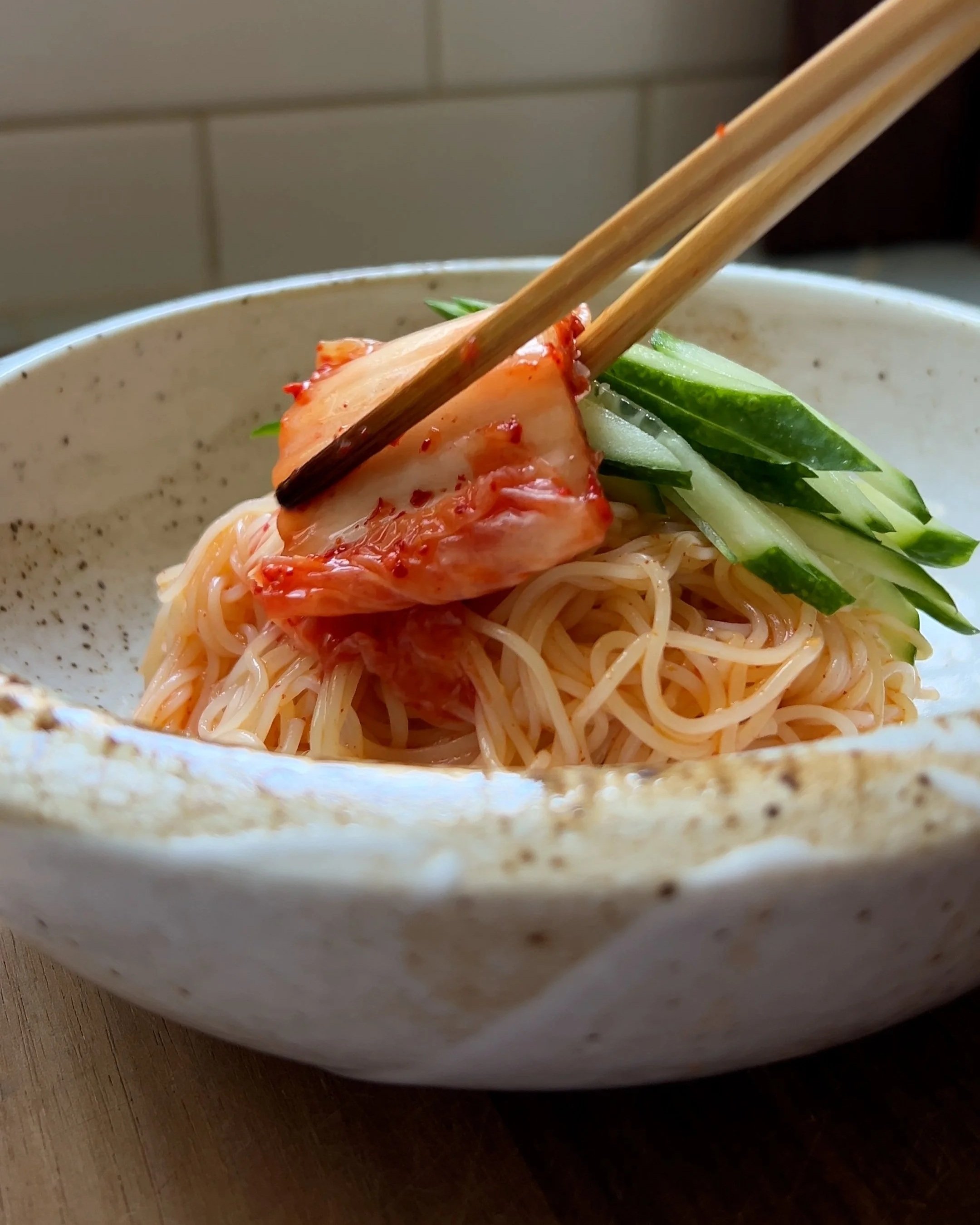
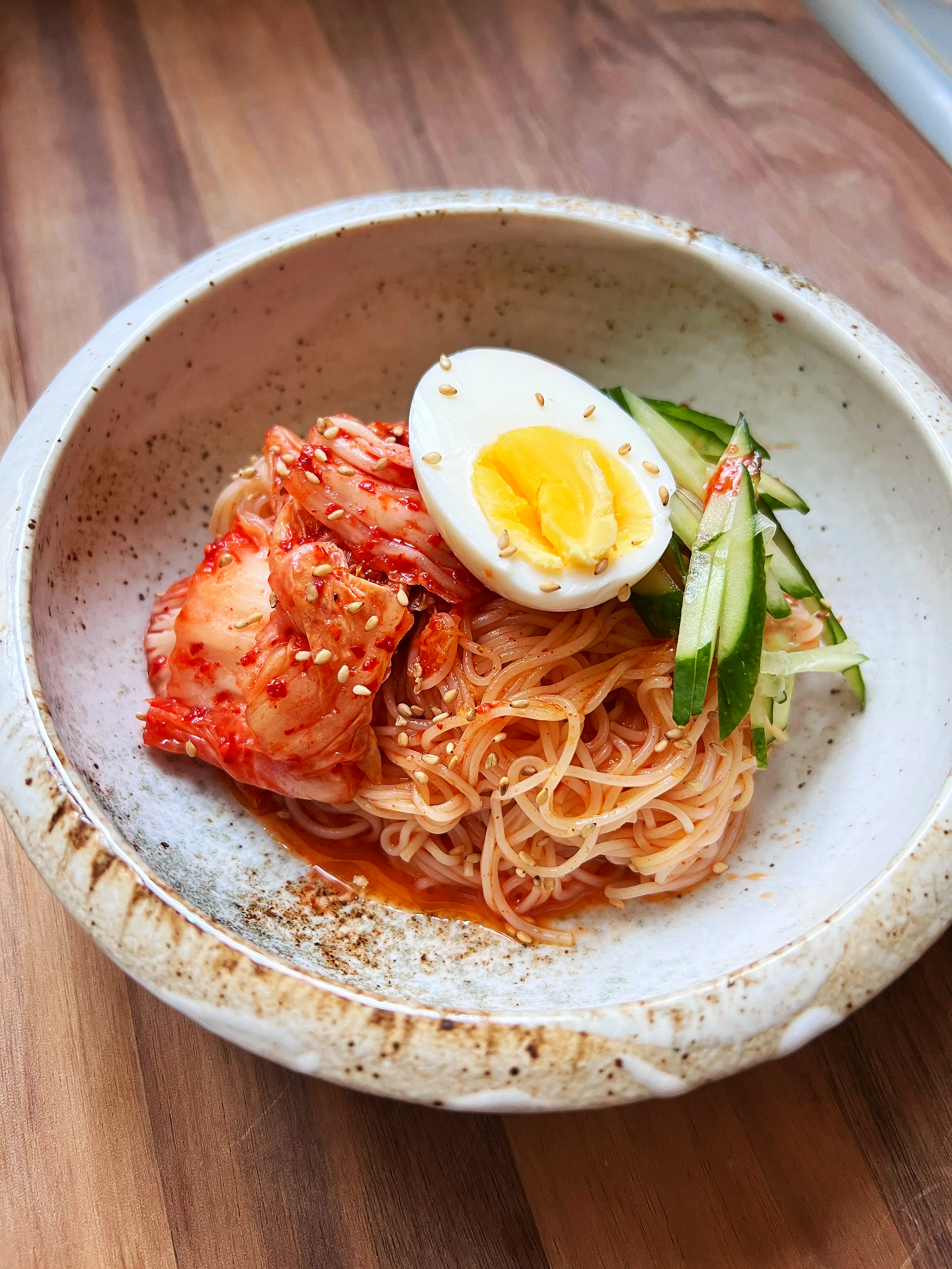
I topped mine with hard boiled egg, sliced cucumber, kimchi and toasted sesame seeds, but this dish is easy to make your own. Try adding shredded chicken or tofu for extra protein, or swap in whatever crunchy vegetables you have on hand, like radish or bean sprouts. It's super easy, everything can be put together in less than 30 minutes. I especially crave this during summer, and make it a lot for lunch for myself, since it's as easy as making instant noodles.
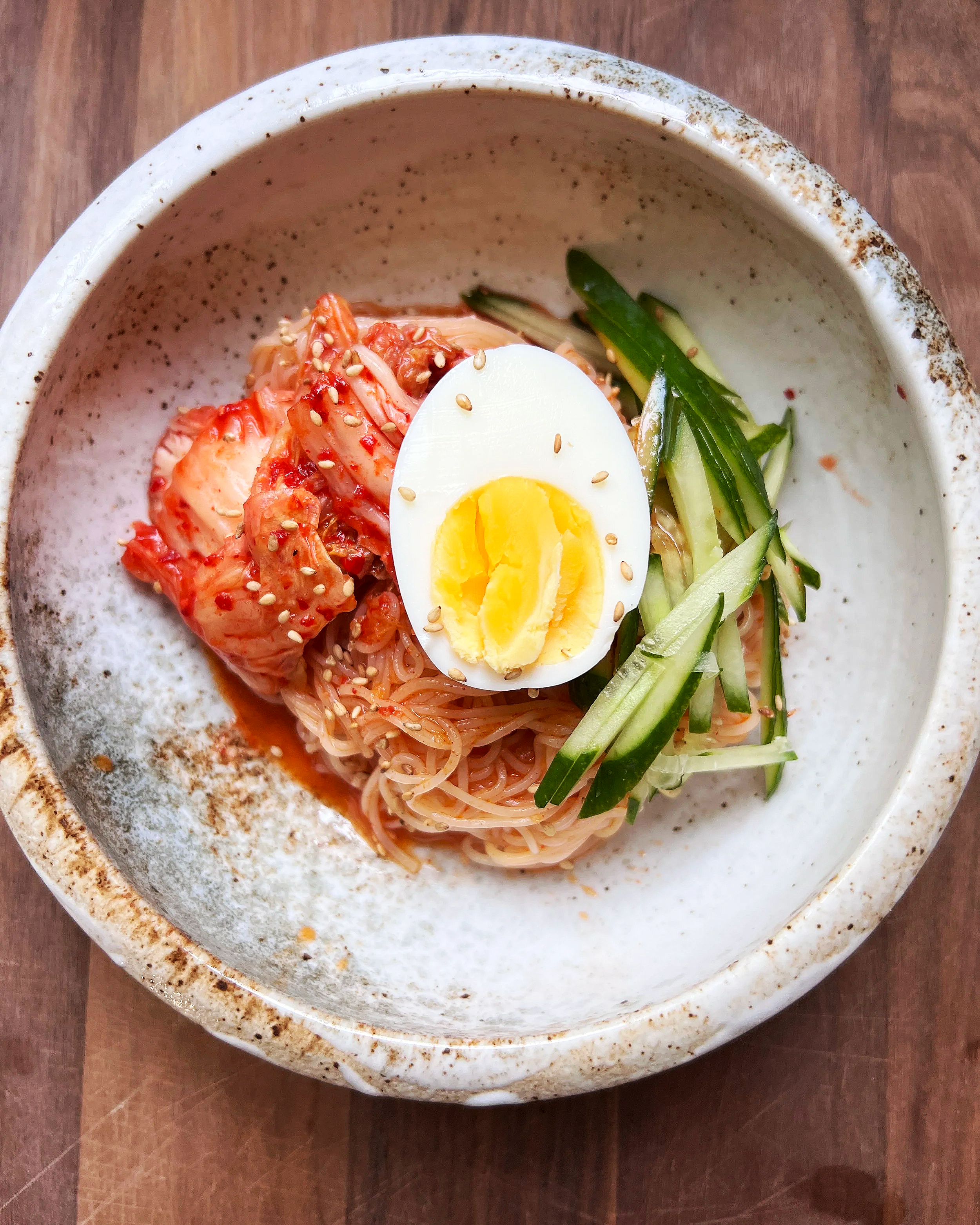
Bibim Guksu
Serves 2
Prep time: 10 minutes
Cook time: 10 minutes
Total time: 20 minutes
Ingredients
For Sauce
1 tablespoon Gochujang
1 tablespoon apple cider vinegar
1 tablespoon soy sauce
2 teaspoons plum syrup (or sugar)
2 teaspoons sesame oil
1 teaspoon ginger
2 bundles somen
1 persian cucumber, thinly sliced
1 hard boiled egg, halved
Kimchi as needed
Toasted sesame seeds, as needed
Preparation
Bring a large pot of water to a boil.
In a large bowl, add gochujang, apple cider vinegar, soy sauce, plum syrup, sesame oil and grated ginger. Mix well and set aside.
Add somen to the boiling water and cook according to the package instructions. Drain and rinse the noodles in a colander under cold running water. Drain the noodles well.
Add the cooked noodles to the bowl with the sauce. Mix well with chopsticks. Divide into two portions in the bowls.
Top with sliced cucumbers, kimchi and halved boiled egg. Sprinkle with toasted sesame seeds. Serve immediately.