Peanut Butter Dan Dan Noodles
Dan Dan Noodles is a classic Sichuan street food. The traditional Sichuan version is a dry noodle dish, meaning there is no broth. The noodles sit in a bowl, coated in a bold, layered sauce made from chili oil, Sichuan peppercorns, soy sauce, black vinegar, and sesame paste. Minced pork, cooked until lightly crispy, is spooned on top along with pickled mustard greens, scallions, and crushed peanuts.
What makes the flavor so distinctive is the combination of sensations: the heat from the chili oil, the numbing tingle from Sichuan peppercorns (called mala), the tang from the vinegar, and the nuttiness from the sesame. It is spicy, savory, sour, and slightly sweet all at once, and the mala numbing effect makes it unlike anything else.
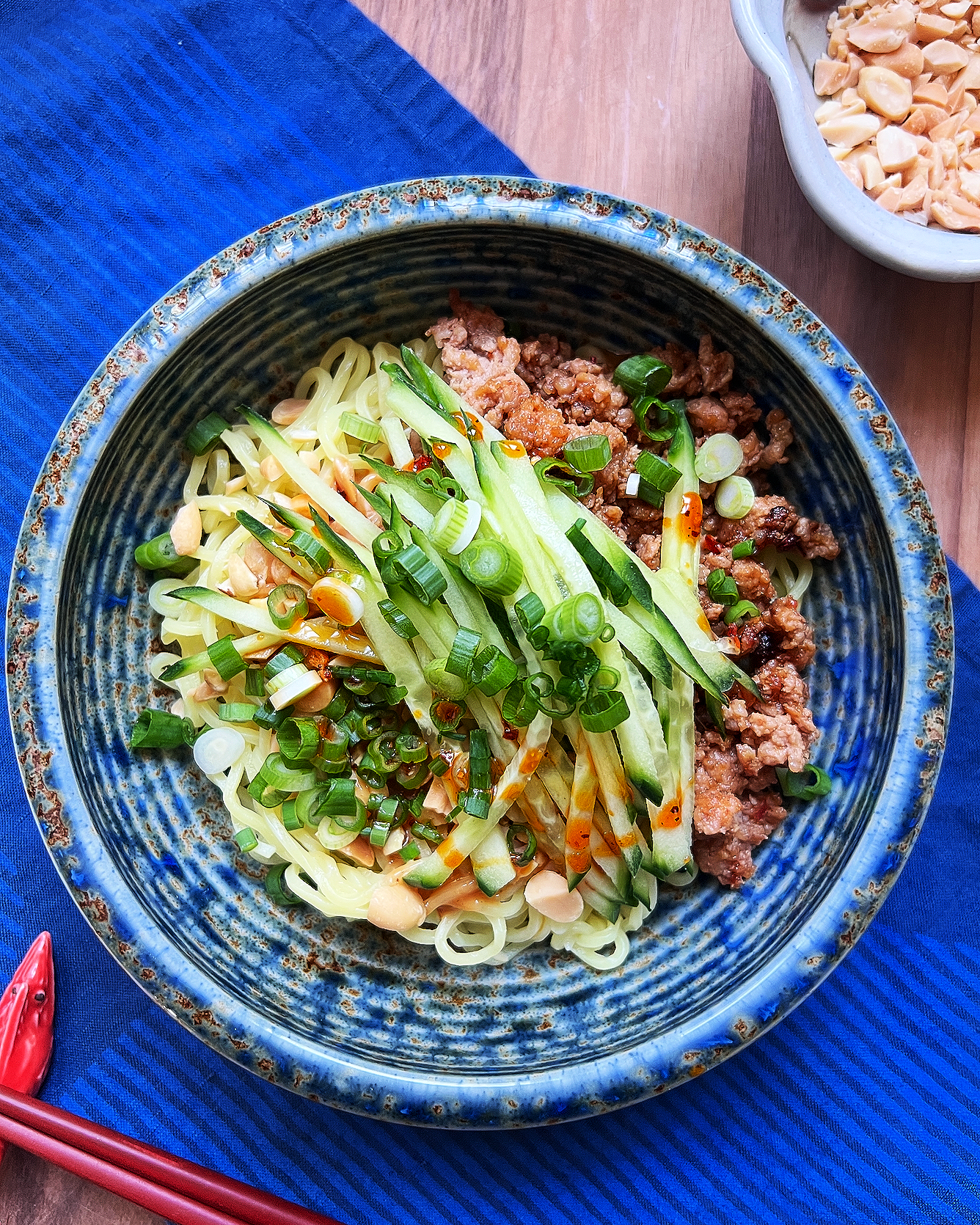
Dan dan noodles have traveled far from those Chengdu street corners, and almost everywhere they landed, they transformed into something new.
In Japan, the dish was introduced by Sichuanese chef Chen Kenmin (one of the original Iron Chefs) and became known as tantanmen. The Japanese version is quite different from the original. It is typically served as a soup, with the sauce stirred into a rich broth of sesame paste and soy milk, and the spice level is significantly toned down. It is sometimes considered a form of ramen.
Sesame Paste vs. Peanut Butter
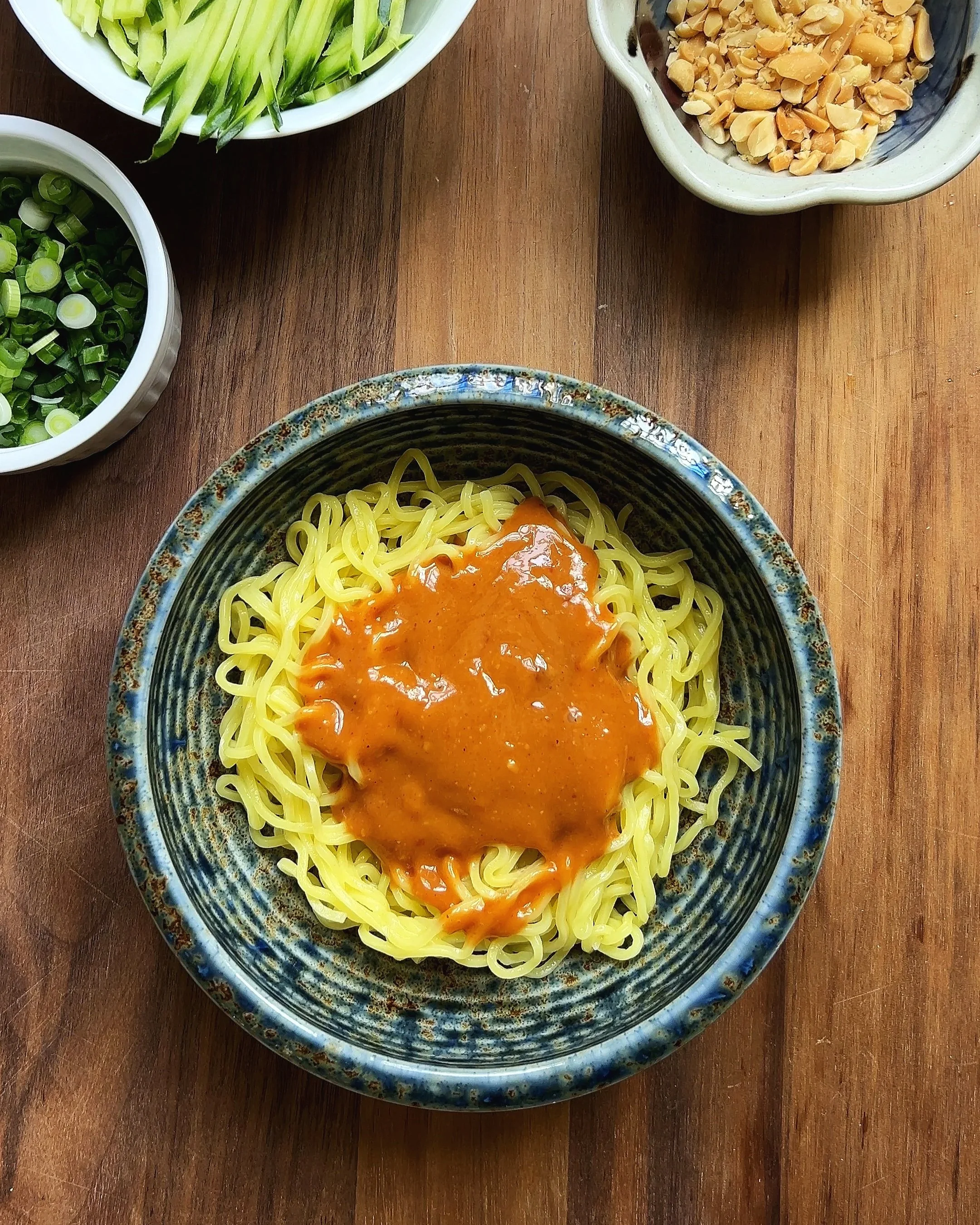
The most common substitution you will see in modern dan dan noodle recipes, including mine, is peanut butter in place of sesame paste. Traditionally, the sauce is made with Chinese sesame paste, which is made from toasted sesame seeds and has a nutty, roasted flavor. It is richer and more intense than tahini.
Peanut butter is not a traditional ingredient in the original dish, but it is a practical and delicious swap. Creamy, unsalted peanut butter has a similar richness and body, and it blends smoothly into the sauce. It is also far easier to find in most pantries.
What Is Toban Djan?
Toban Djan(also commonly spelled tobanjan in Japanese, or Doubanjiang) is a fermented chili bean paste that originated in Sichuan, China. It is made from fermented broad beans, soybeans, salt, and chili peppers, and it has a deep, savory, spicy flavor that is hard to replicate with anything else. The fermentation process gives it a complexity that goes far beyond simple heat. It is salty, umami-rich, and layered in a way that makes whatever you cook with it taste like it has been simmering for hours.
In this recipe, Toban Djan goes into both the peanut sauce and the pork mixture, and it is doing a lot of heavy lifting in both. It is also the key ingredient in mapo tofu, one of the most iconic dishes in Sichuan cuisine, and it works beautifully in stir fries and braised dishes.
You can find Toban Djan at most Asian grocery stores, usually in the condiment aisle. Look for Lee Kum Kee or Pixian Toban Djan, which is considered the gold standard and comes from Pixian county in Sichuan, where it has been produced for over 300 years. Once opened, it keeps in the fridge for a long time, so one jar will carry you through many recipes.
A little goes a long way. Start with a small amount, taste as you go, and adjust from there.
What Noodles Should You Use?
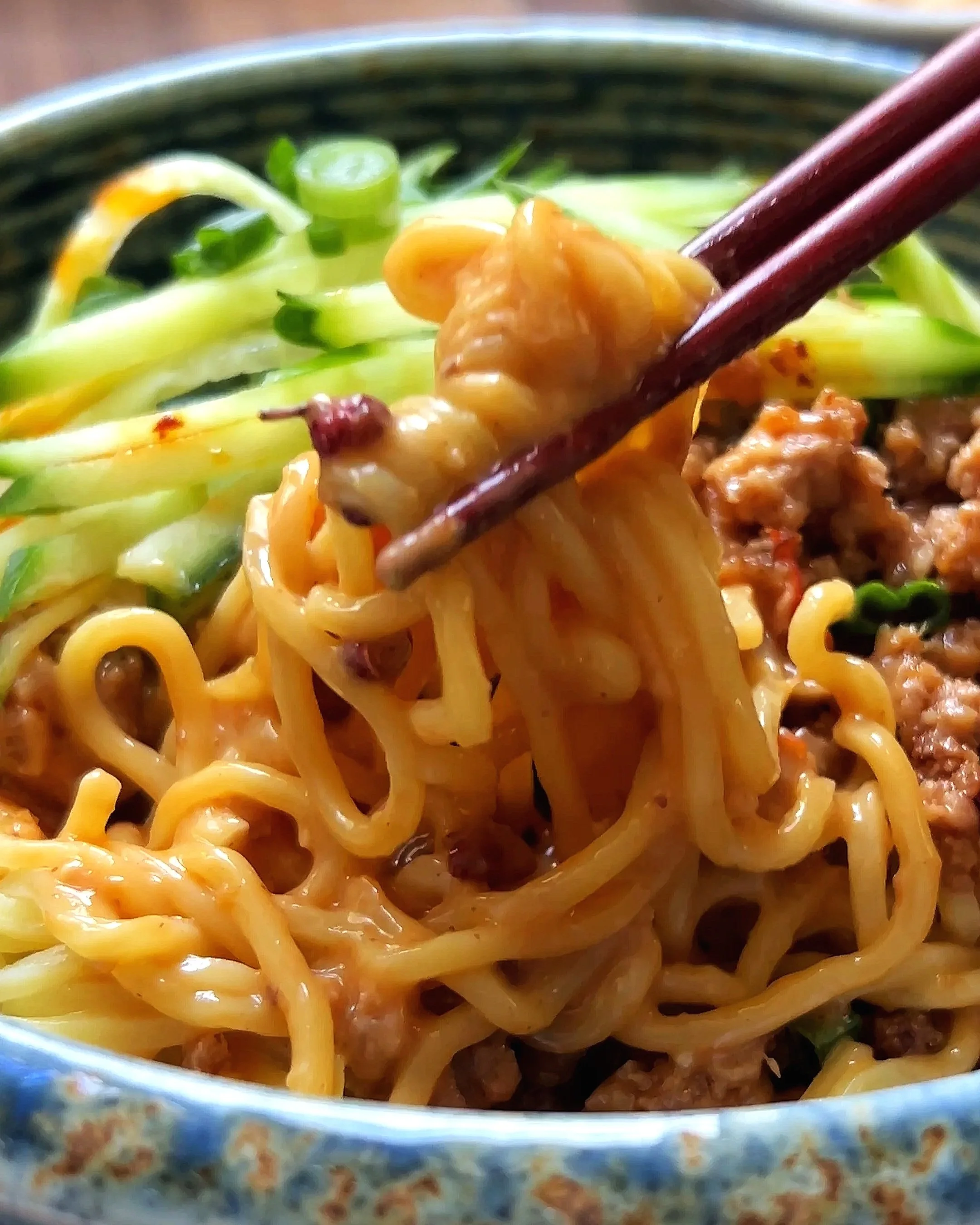
In Sichuan, thin wheat noodles are traditional. Outside of China, fresh ramen-style noodles work beautifully because they have the right chew and weight to hold up against a bold sauce. I like using Sun Noodles Kaedama noodles for this reason. If you can only find dried noodles, look for thin wheat noodles or udon noodles.
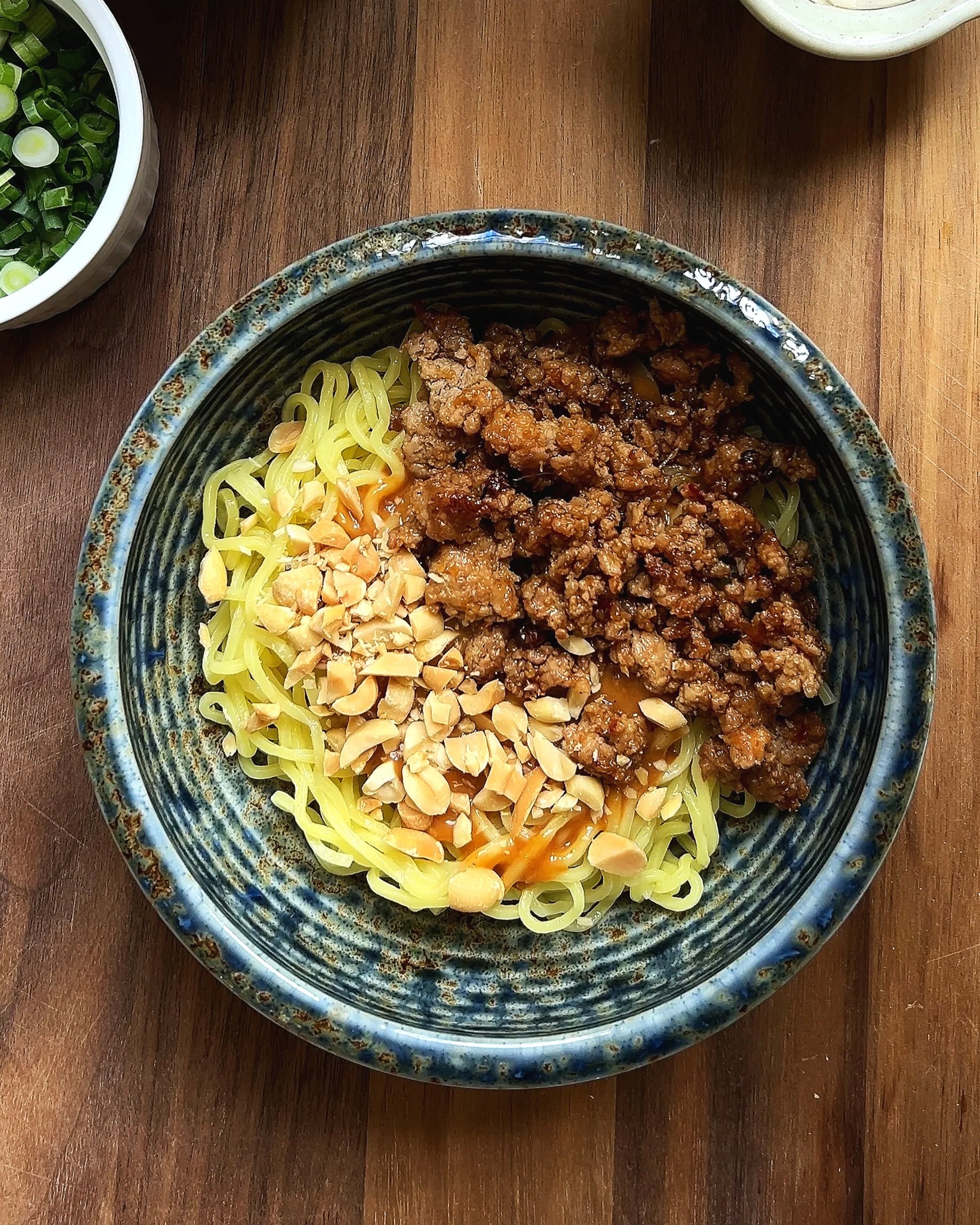
This type of noodle is ideal when you want something quick and light. The sauce can be made ahead of time, the toppings are simple, and the whole bowl comes together in less than 30 minutes. Chilled cucumber cut into thin strips adds a refreshing contrast to the richness of the peanut sauce. Adjust the spiciness with chili oil. If you want to make this even faster, you can skip the pork altogether. Just add more vegetable toppings and it becomes a very satisfying meal on its own.
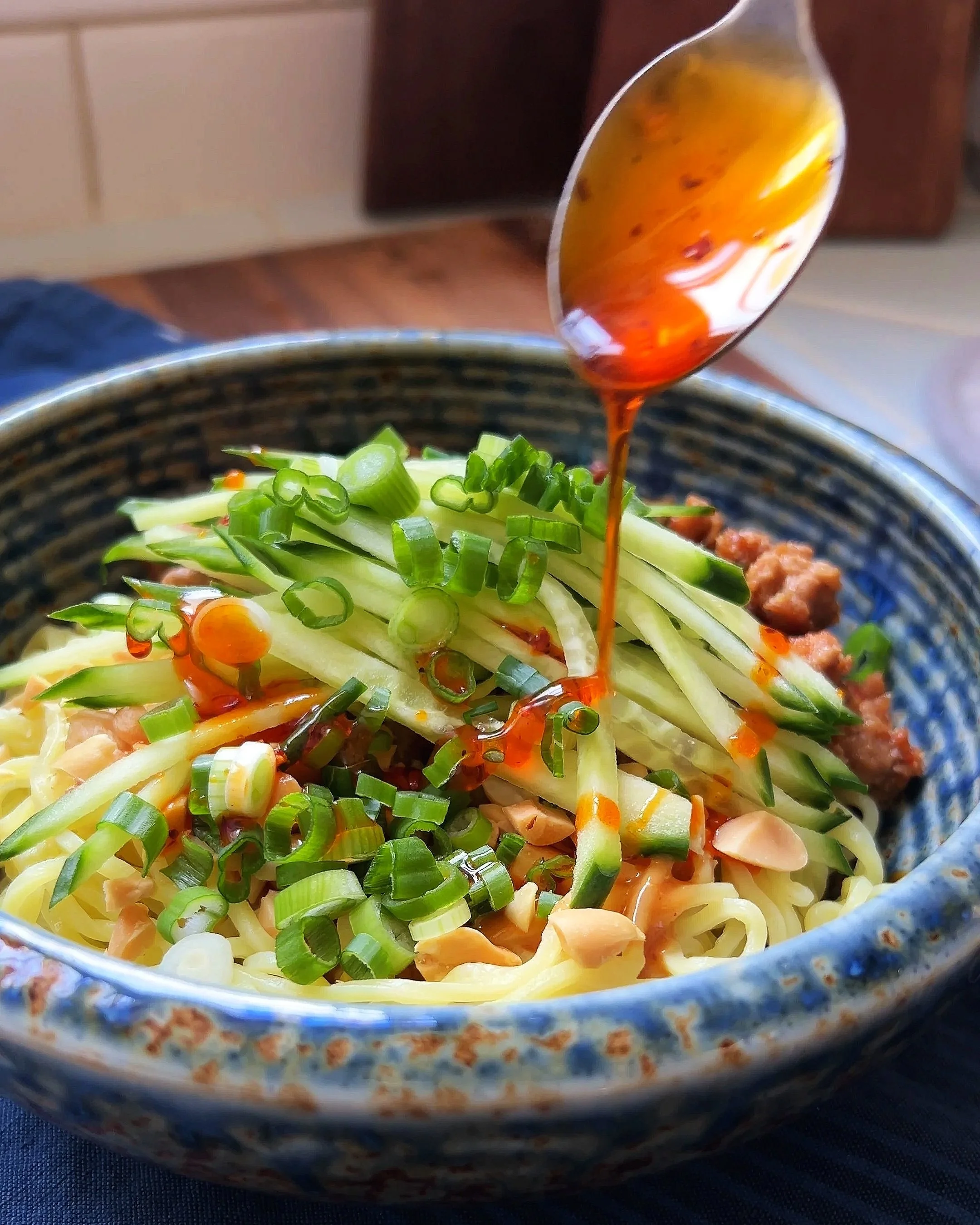
One of the things I love most about dan dan noodles is that almost everything you need is already in your pantry. Soy sauce, sesame oil, chili oil, peanut butter, garlic, and a block of noodles. Add Toban Djan (a fermented chili bean paste from Sichuan cuisine) for spicy kick and umami. Toban Djan is the same paste used in mapo tofu and many stir fries, so once you have a jar in your fridge, it opens up a whole world of cooking. It keeps for a long time and is worth tracking down.
Dan dan noodles started as street food for working people who needed something fast, filling, and full of flavor. Hundreds of years later, that is still exactly what they are.
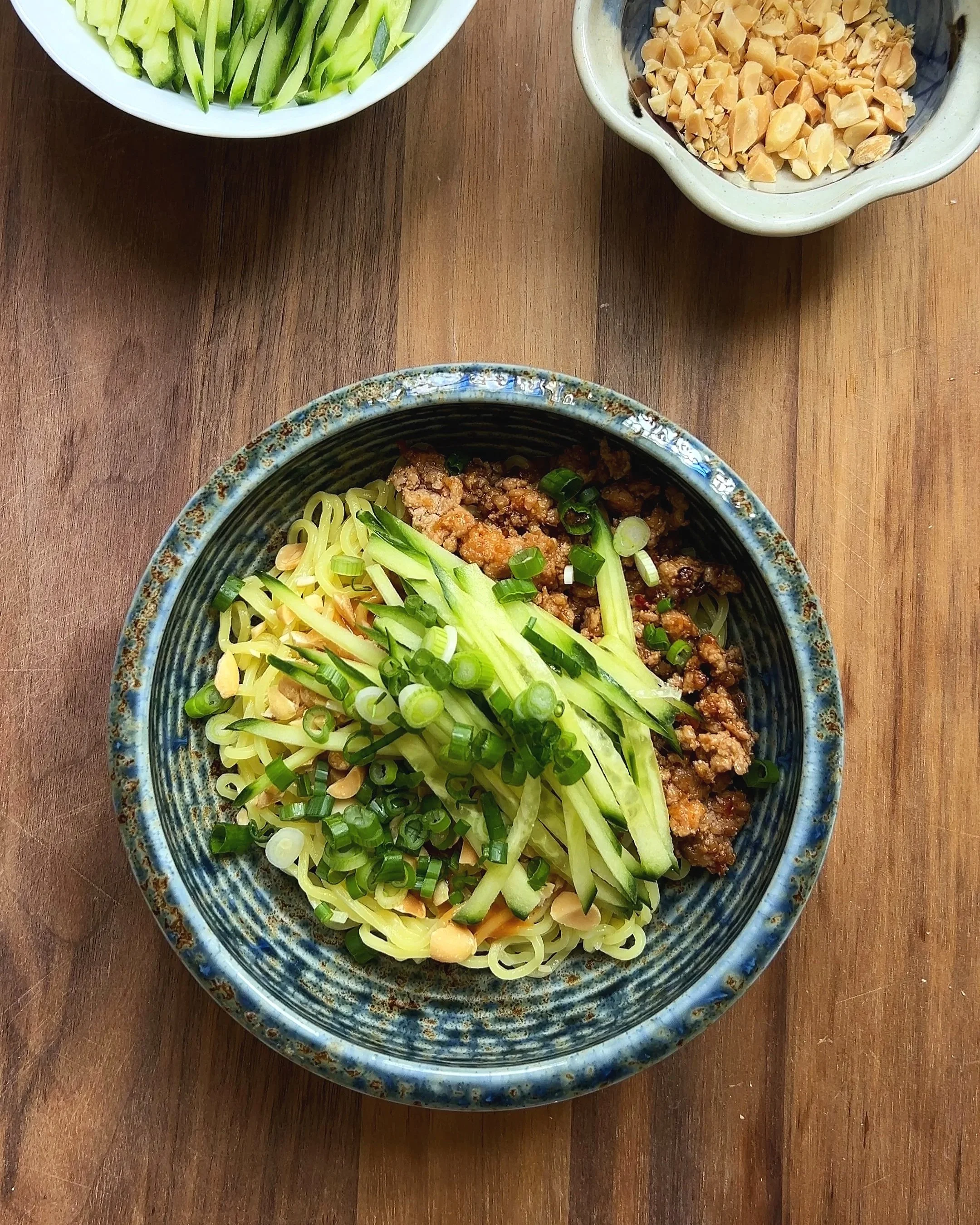
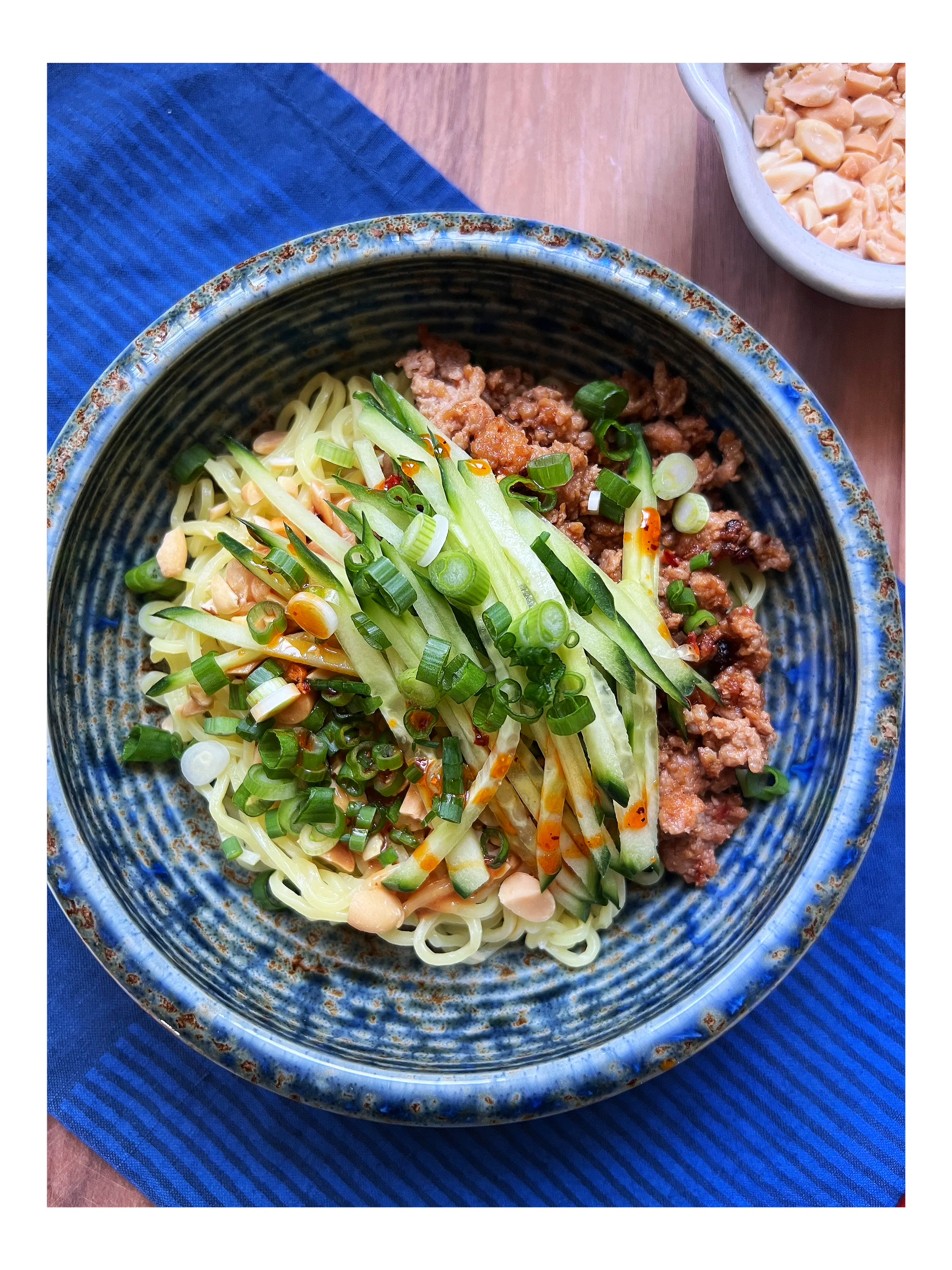
Peanut Butter Dan Dan Noodles
Serves 2
Prep time 5 min
Cooking time: 15 min
Total 20 min
Ingredients
For Peanut Sauce
3 tablespoons peanut butter, creamy and unsalted
3 tablespoons water
1 tablespoon soy sauce
1 tablespoon rice vinegar
2 teaspoons sugar
1 teaspoon toban djan
1 teaspoon miso
1 tablespoon sesame oil
For Pork Toppings
200g ground pork
2 cloves garlic, grated
1 teaspoon ginger, grated
1 teaspoon toban djan
1 teaspoon miso
1 tablespoon soy sauce
1 tablespoon sake
1 teaspoon sugar
1 teaspoon Sichuan pepper
Noodles and Garnish
2 portions fresh ramen noodles
1 Persian cucumber, thinly sliced
2 Scallions, sliced
2 tablespoons chopped peanuts
Chili crisp or chili oil, as needed
Preparation
In a small bowl, combine the peanut butter, water, soy sauce, rice vinegar, sugar, miso,toban djan, and sesame oil. Mix well and set aside.
Heat a pan over medium heat, add oil, and coat the pan. Add the ground pork, garlic, ginger, and toban djan. Cook, breaking the pork into small pieces, until no longer pink. Add the miso, soy sauce, sugar, sake, and Sichuan pepper. Mix well, turn off the heat, and set aside.
Cook the ramen noodles according to the package instructions and divide them between two bowls. Spoon the sauce equally over each portion. Top with the seasoned pork, cucumber, peanuts, and scallions. Finish with chili crisp or chili oil, and mix well before serving.