Gyūdon with Onsen Tamago
This bowl took less than 30 minutes to make. Meet gyudon, Japan's original fast food.
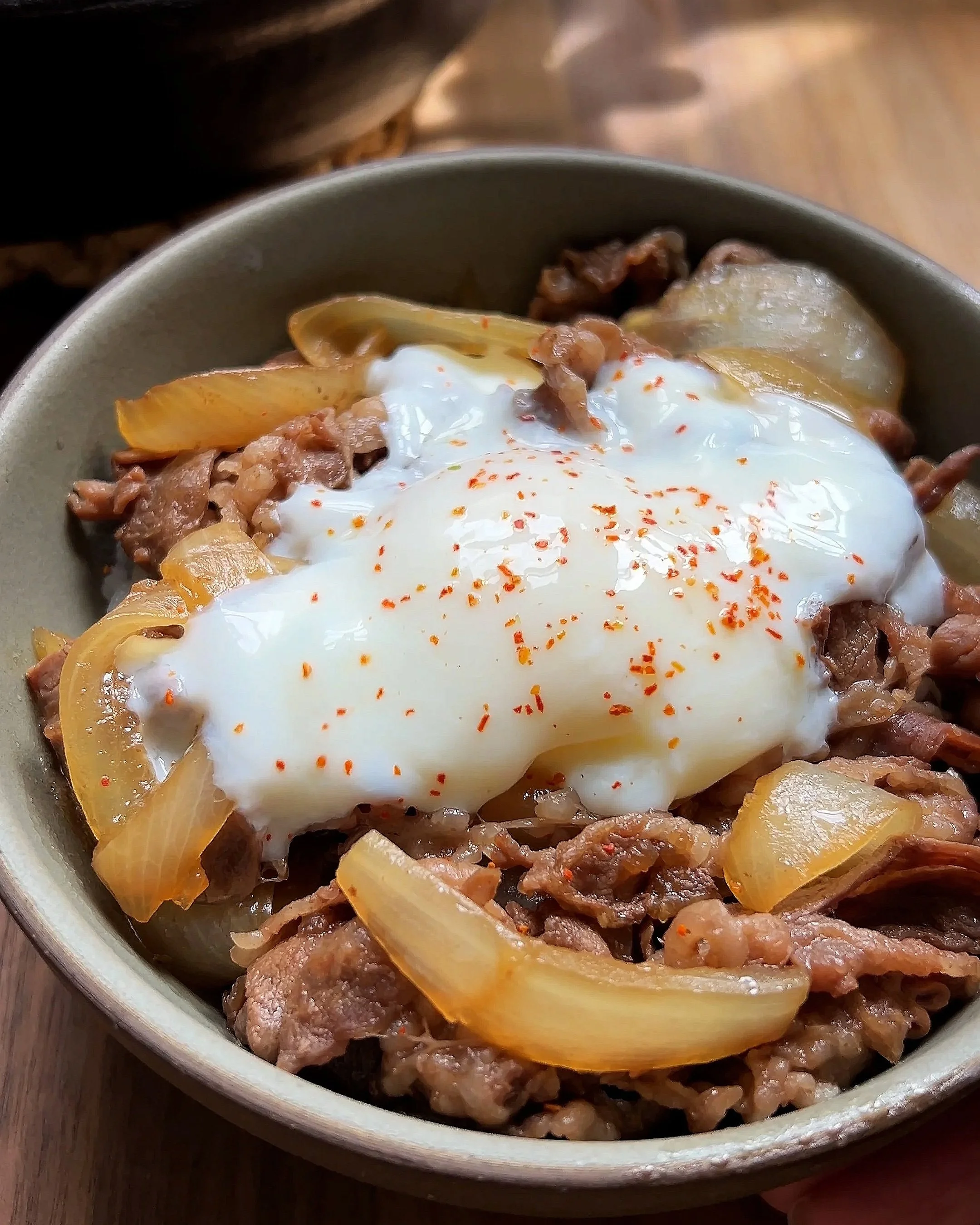
Table of contents
What’s Gyudon?
The ingredients
Onsen tamago, the perfect topping
The science behind onsen tamago
Making Onsen Tamago in a rice cooker
What is Gyudon?
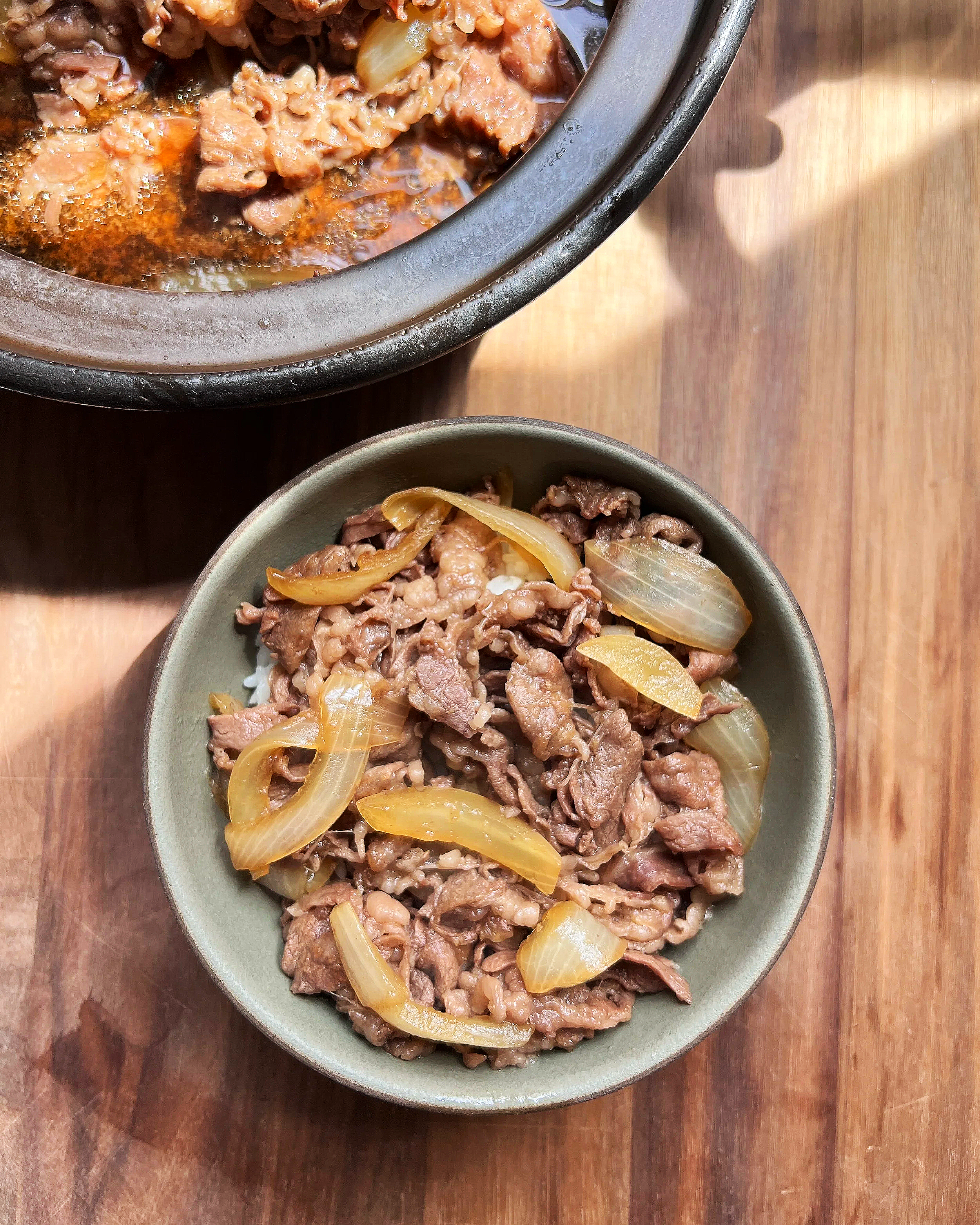
Gyudon belongs to a beloved category of Japanese cooking called don mono, which refers to meals served over rice in a bowl. The word "don" is short for donburi, a type of bowl slightly larger than your everyday rice bowl. Gyudon shares this category with other classics like oyakodon and katsudon, but what unites them all is how effortlessly quick they are to make. Perfect for a busy weeknight. A single bowl is hearty, filling, and packed with protein. Yoshinoya, the iconic gyudon chain, has built its brand around a simple promise since the 1970s: fast, cheap, and tasty. Decades later, that promise still holds.
The ingredients
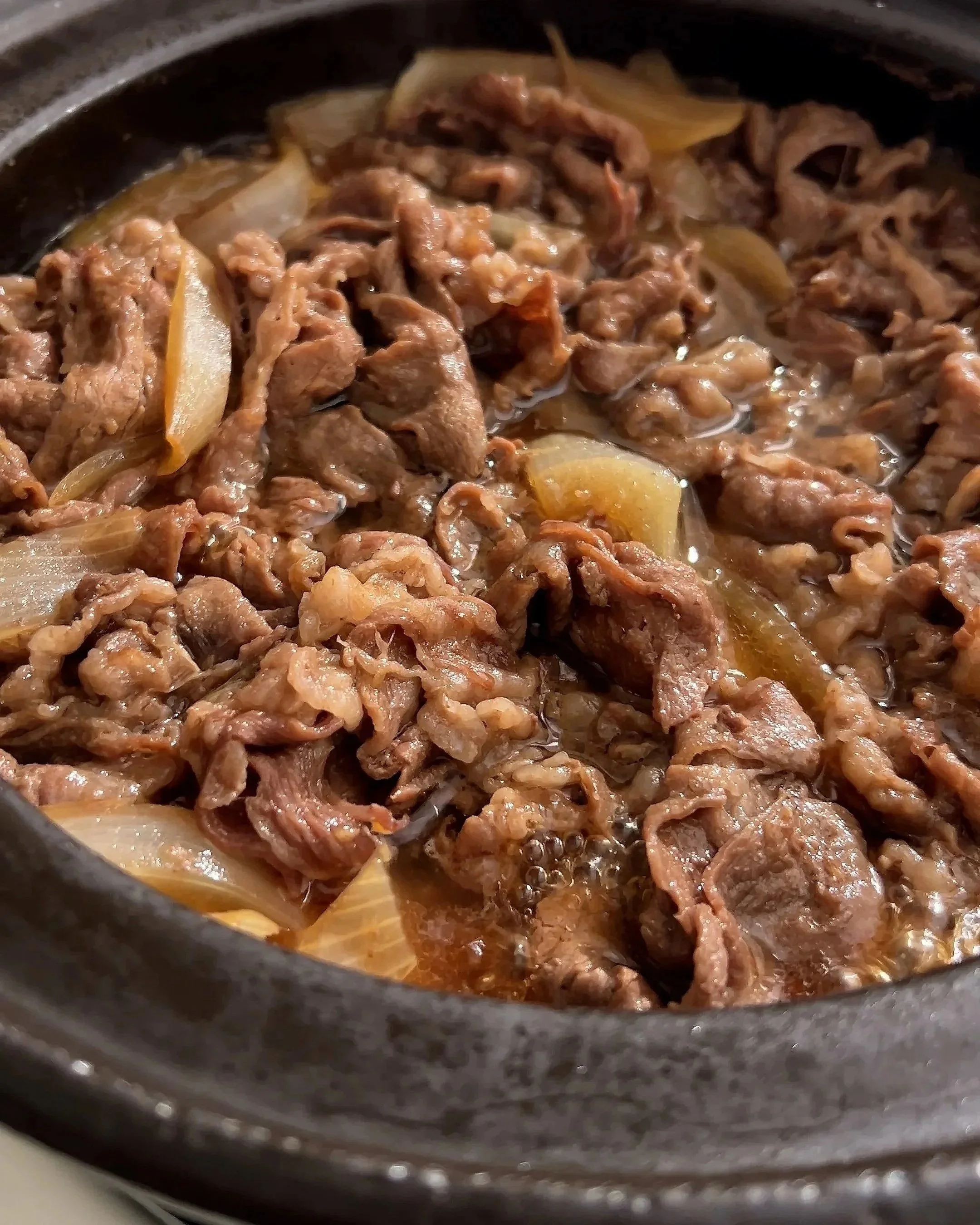
It’s so simple! Thinly sliced beef, onion, and grated ginger. Cooked with Japanese staple pantry items: shoyu, mirin, sake, and sugar. I use sake so often in my cooking that I finally got myself a magnum size bottle!
In Japan, thinly sliced beef is everywhere. Outside of Japan, head to an Asian grocery store and look for beef labeled "for sukiyaki or shabu shabu." That's exactly the cut you want.
Usually onion is the only vegetable in gyudon, so I like to make a quick side salad or a simple vegetable dish like goma-ae (recipe in my cookbook!) A sprinkle of shichimi togarashi or sansho pepper on top adds a nice kick.
Onsen tamago, the perfect topping
I love eating gyudon with onsen tamago. In Japan, I would use a raw egg yolk as a dipping sauce since raw eggs there are safe to eat thanks to rigorous hygiene standards from farm to table. In the US, I use onsen tamago instead, and honestly it might be even better.
Onsen means hot springs and tamago means egg. Traditionally, these eggs were slow cooked using the natural heat of hot springs. I recently discovered that my Vermicular rice cooker has temperature control, something I completely missed for eight years of ownership. If you have a sous vide machine, that works beautifully too. I also tested using my regular zojirushi cooker to make onsen tamago and it worked!
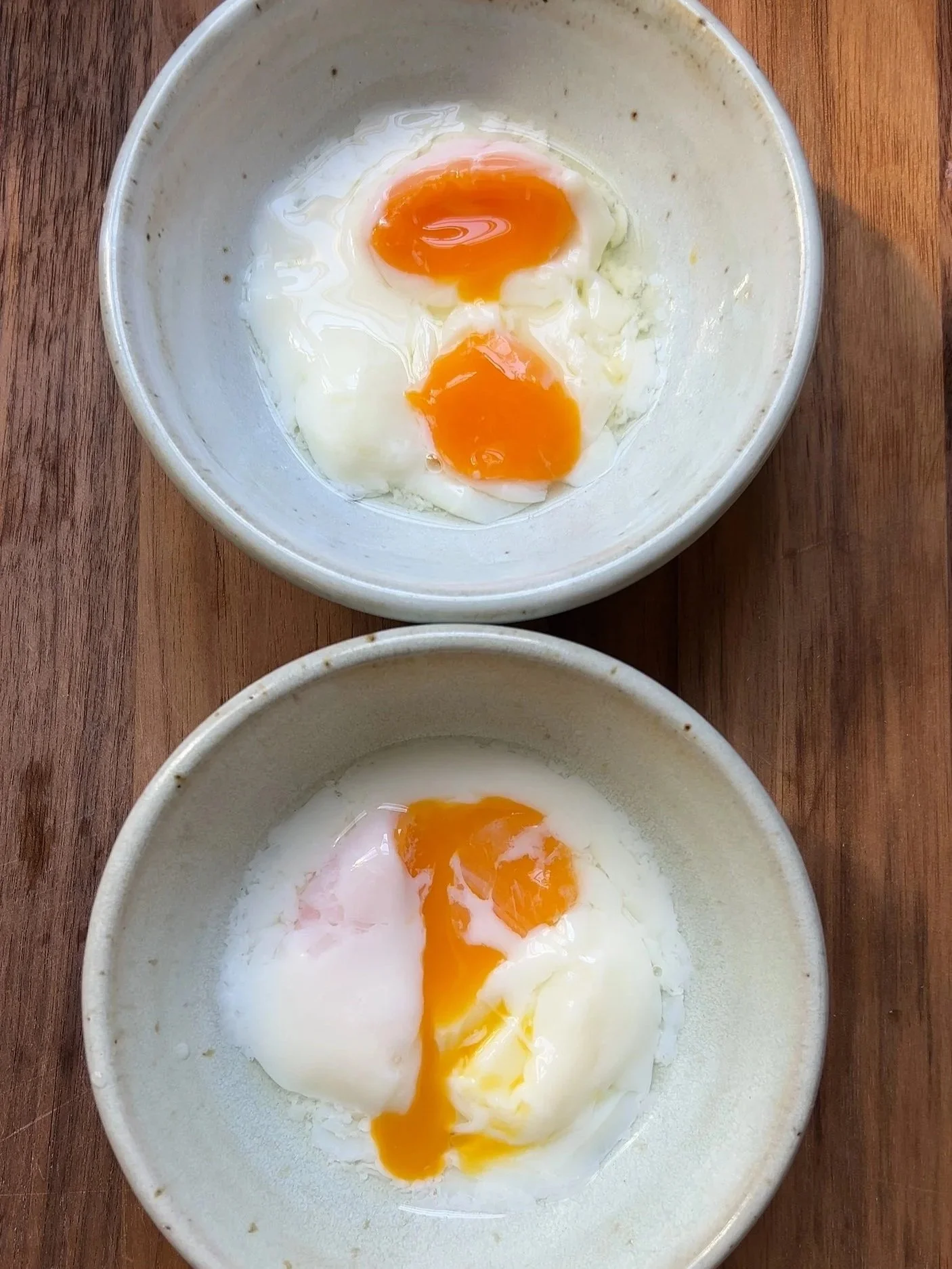
top: 20min onsen tamago, bottom 18min onsen tamago
The science behind onsen tamago
The key is to hold the water at a steady 70°C / 158°F and cook for 18 minutes. That's it.
Egg white and yolk coagulate at different temperatures, , which is exactly what makes onsen tamago work.
Egg white
60–65°C / 140–149°F
Egg yolk
65–70°C / 149–158°F
By cooking at 70°C(158˚F), the white sets softly while the yolk stays custardy and runny. The result is a texture you cannot achieve any other way.
Onsen tamago is also wonderful as a dipping sauce for sukiyaki or tsukune. Once you start making it at home, you will find yourself putting it on everything.
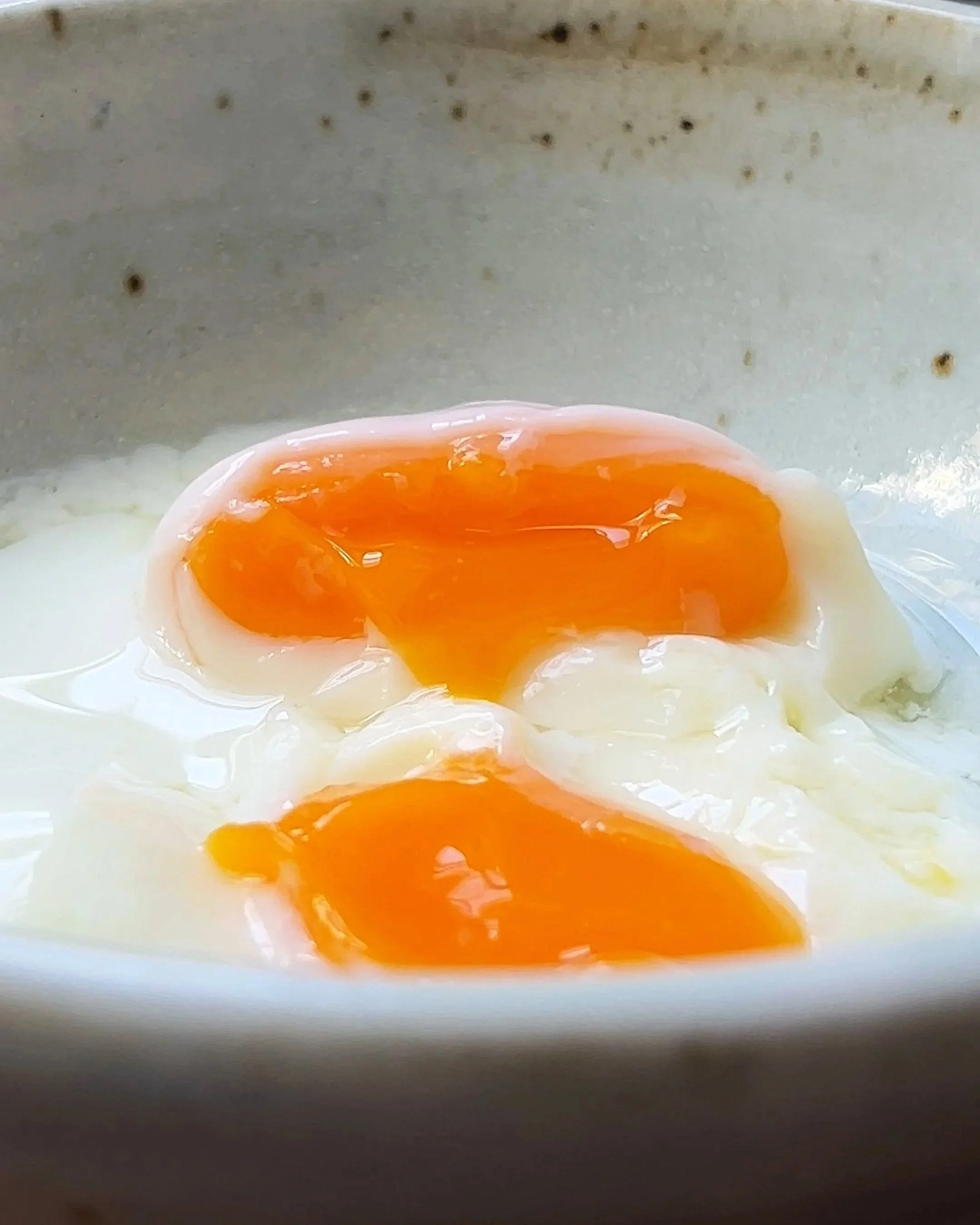
20 min onsen tamago
Making Onsen Tamago in a rice cooker
First, turn on your rice cooker's "keep warm" setting. Add about 800ml of boiling water to the rice cooker, then gradually add tap water until your thermometer reads 70°C (158°F), roughly 200ml to 300ml of tap water. Gently lower room temperature eggs into the cooker and cook for 18 minutes.
I tested two eggs at 18 minutes and 20 minutes. The 20-minute eggs came out more set. It's totally personal preference, but I like mine a little runnier, so 18 minutes is my sweet spot.
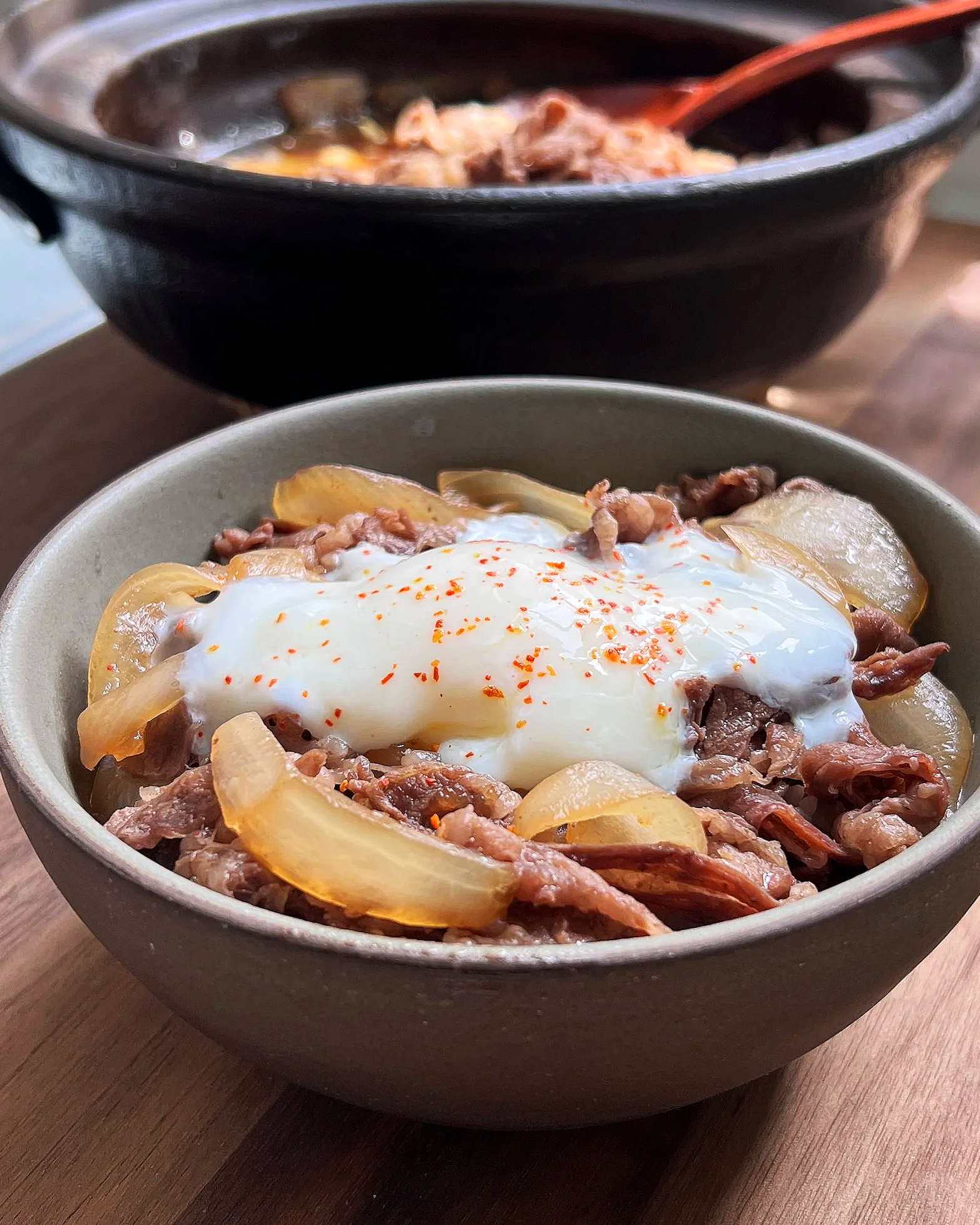
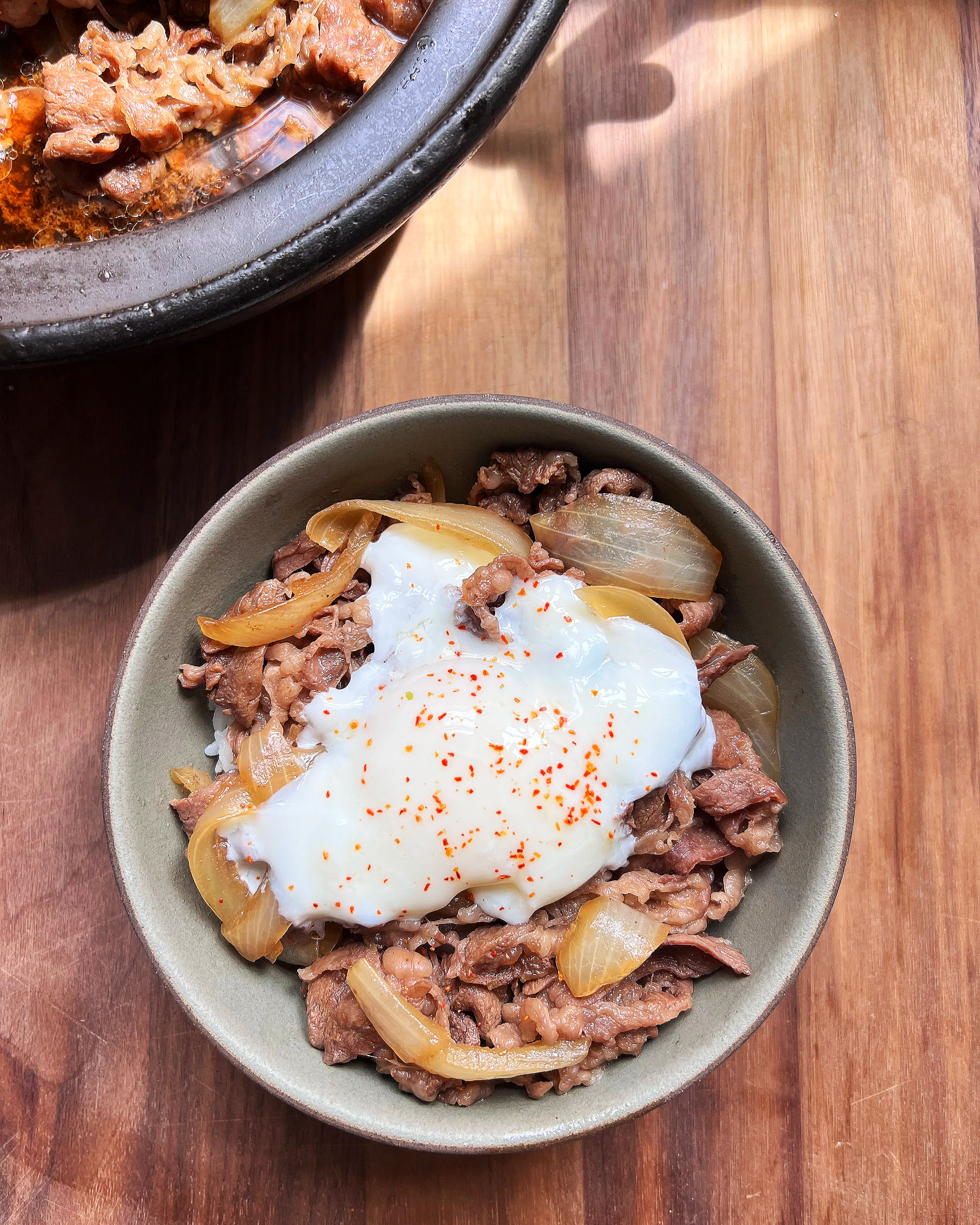
Gyudon with Onsen Tamago
Serves 2
Prep time 5 min
Cooking time: 15 minutes
Total 20 min
Ingredients
½ onion, sliced
4 tablespoons shōyu (soy sauce)
2 tablespoons sake
2 tablespoons mirin
2 teaspoons sugar
1 teaspoon grated ginger
9 ounces thinly sliced beef
Toppings
Onsen tamago ( (See above how to make onsentamago)
Shichimi togarashi
Preparation
Add sliced onion, 1 cup of water, soy sauce, sake, mirin, sugar, and ginger to a medium pot or frying pan and bring to a boil. Once boiling, lower the heat to a simmer.
Add the beef. Spread the sliced beef in the pot and cook for 15 minutes, or until the cooking liquid is reduced by half, skimming off any scum as needed.
Serve over rice. Top with onsen tamago and a sprinkle of shichimi togarashi if you'd like!