Ribollita
Ribollita is a rustic soup that originated in Tuscany, Italy. The word “ribollita” means “reboiled” or “cooked twice,” which tells you everything about its humble beginnings. Traditionally, this soup was made by reheating leftover vegetable soup the next day and adding stale bread to make it more filling. It’s a beautiful example of cucina povera, simple cooking that transforms scraps and pantry staples into something deeply comforting.
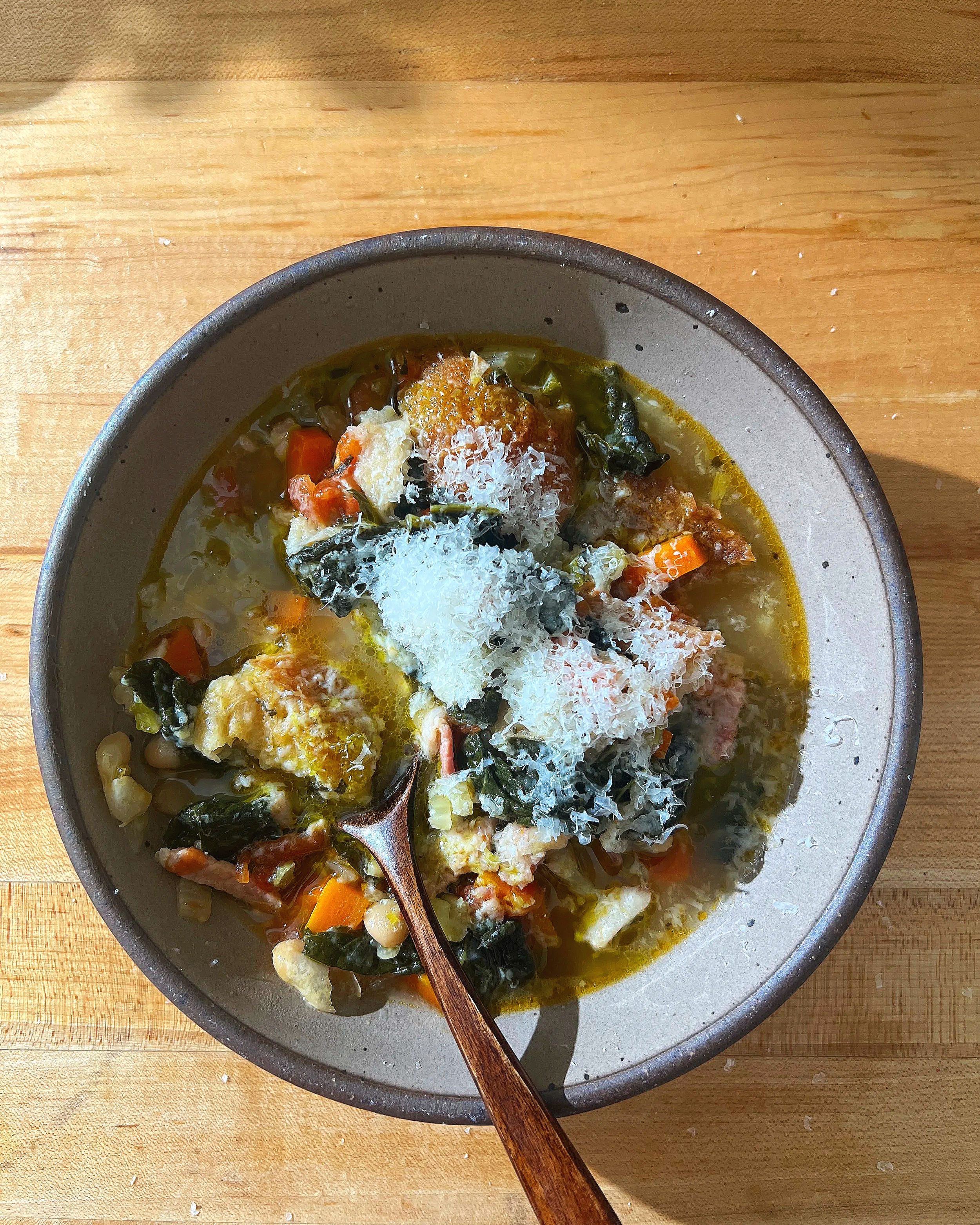
I’ve always loved chunky soups more than puréed ones, and ribollita is exactly that kind of soup. It’s hearty, textured, and satisfying. This is one of my favorite soups to make during cold weather. It feels cozy, nourishing, and substantial enough to be a full meal.
Authentic ribollita almost always includes cannellini beans and Tuscan black cabbage, also known as cavolo nero or dino kale. Personally, I prefer dino kale over regular curly kale. It has a deeper flavor and a slightly more tender texture when cooked. I often pick it up at the market and use it not only for soups but also for salads. It’s also wonderful in miso soup. If cavolo nero is difficult to find where you live, regular kale works well. You can also substitute cabbage or Swiss chard.
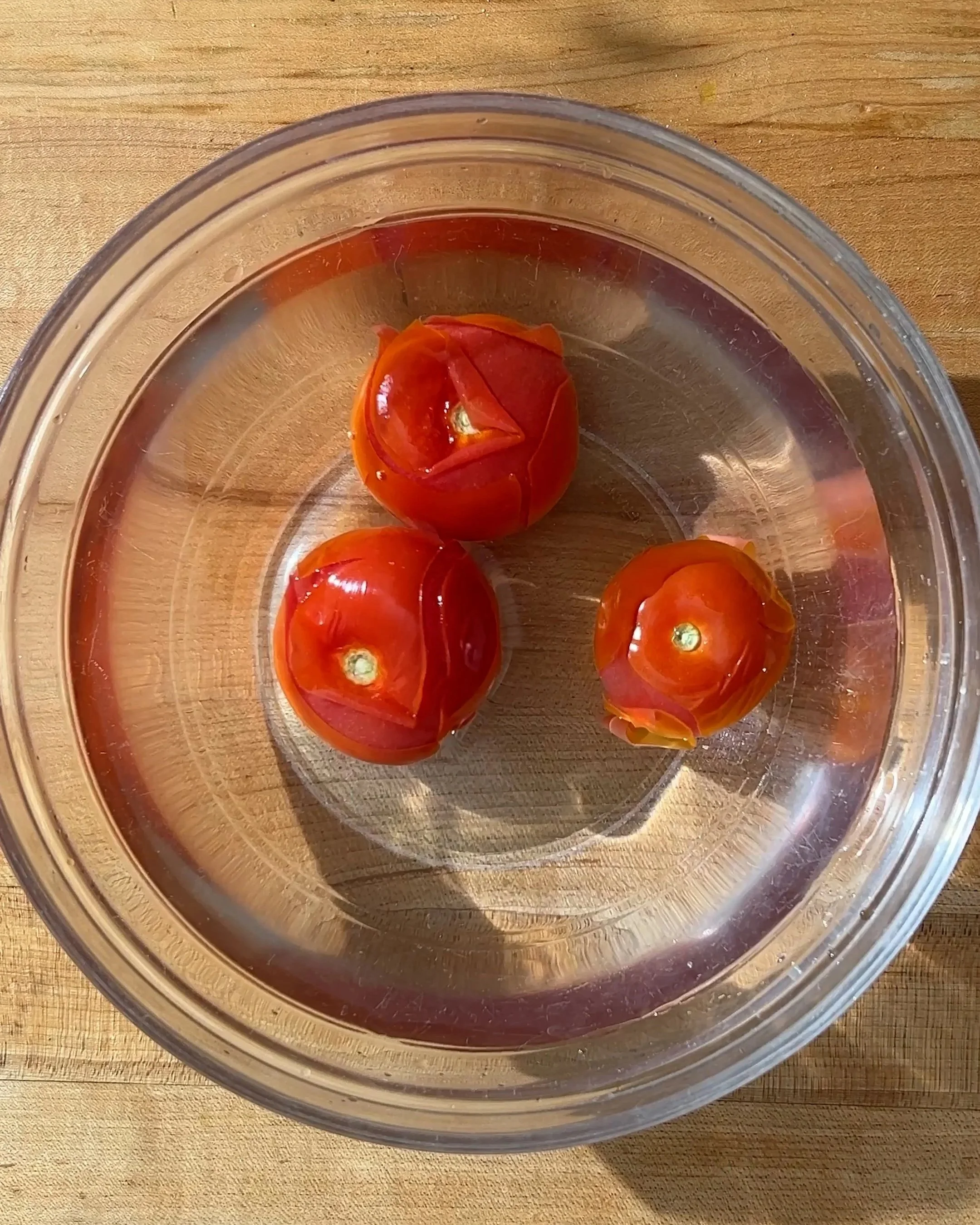
For the tomatoes, I know peeling them is an extra step, but I highly recommend it. Removing the skin improves the texture significantly. The tomatoes almost melt into the soup, leaving behind a gentle acidity without any chewy bits of skin. If you really want to skip this step, you can omit the tomatoes altogether. I’ve made it both ways, and while it’s still good without them, I personally prefer the brightness they add.
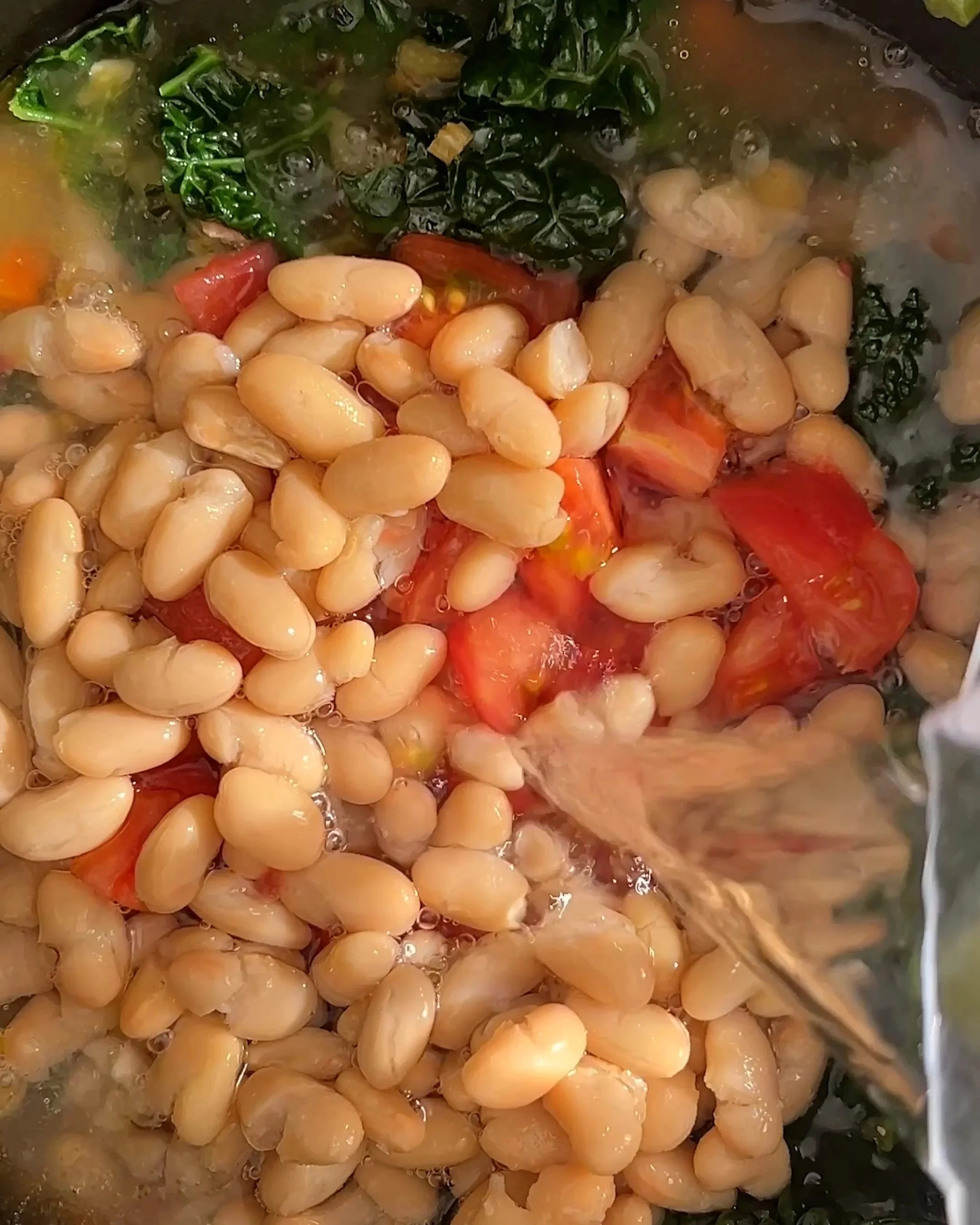
If you are vegetarian or vegan, you can easily adapt this recipe. Simply skip the bacon and use water instead of chicken stock. Because the soup is built on layers of aromatic vegetables, beans, and greens, it still develops plenty of flavor and natural umami.
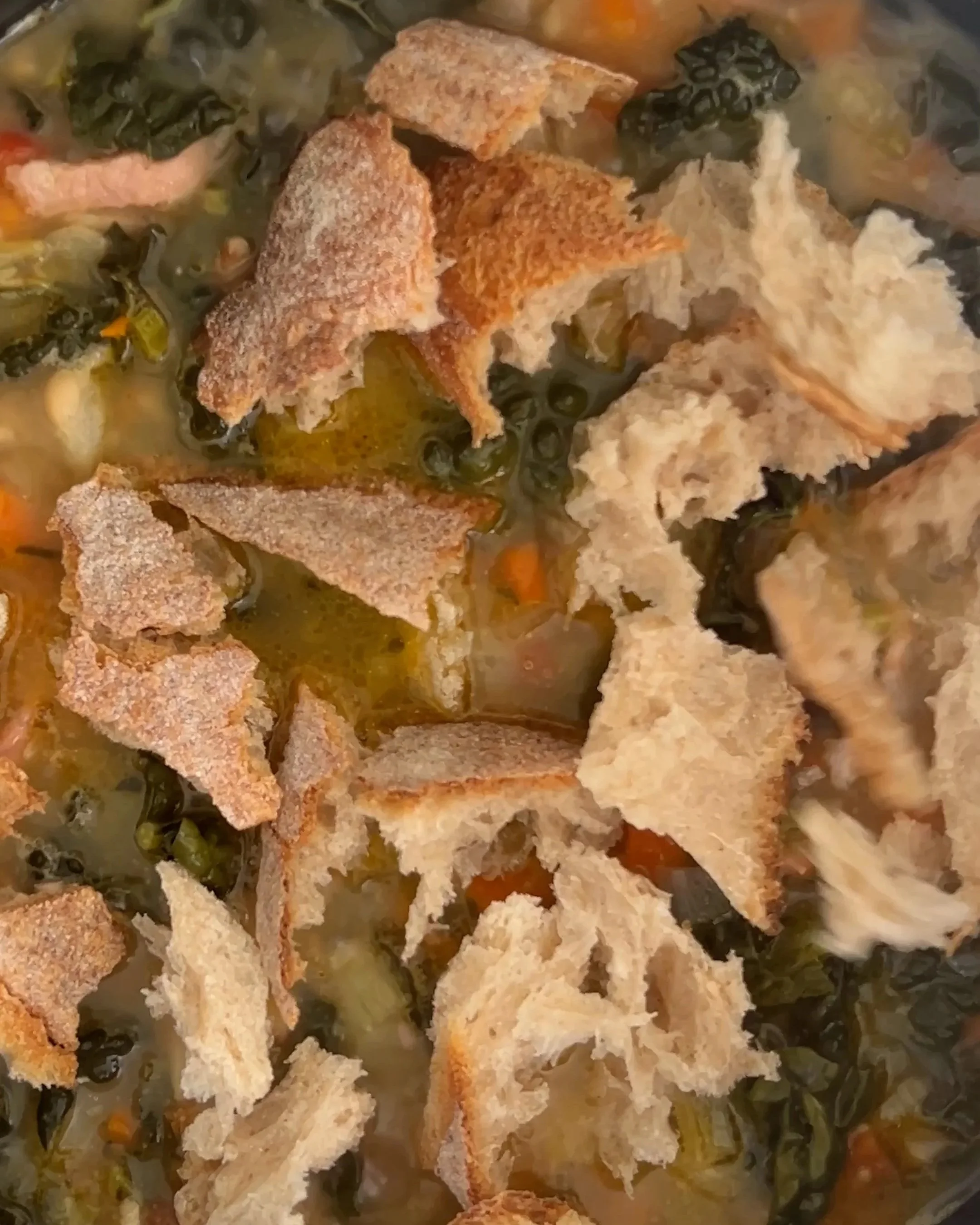
One of the most unique ingredients in ribollita is bread. Make sure to use a rustic, crusty bread such as sourdough or a baguette. Soft sandwich bread or milk bread is not ideal here. The bread absorbs the broth and softens, thickening the soup naturally. The texture actually reminds me of Japanese “ofu” or “fu” (麩), which is dried wheat gluten. Fu is often used in miso soup or clear soups like osuimono. Just like bread in ribollita, fu soaks up the soup and becomes soft and satisfying once rehydrated. That comforting, absorbent texture is one of my favorite parts of this dish.
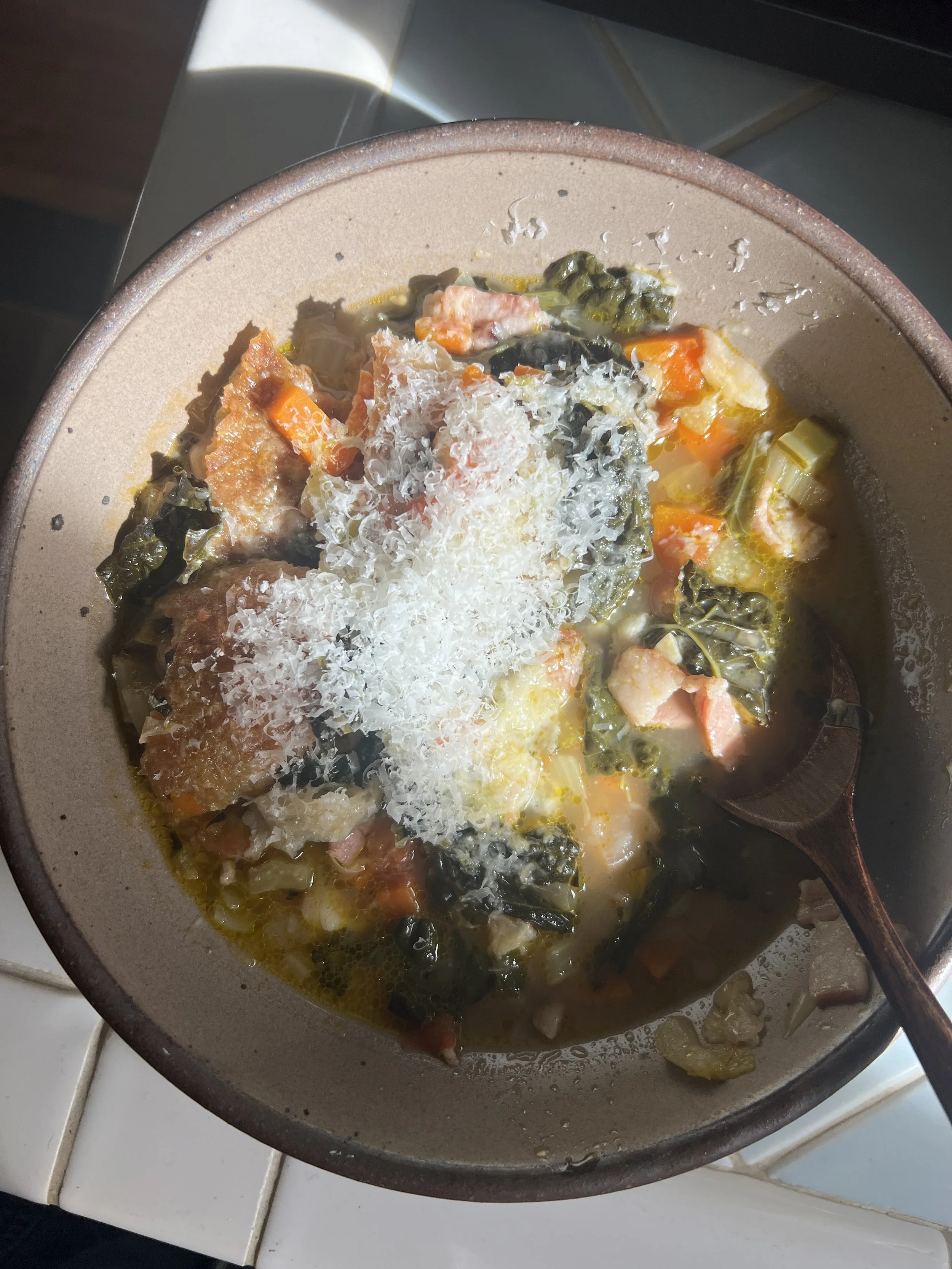
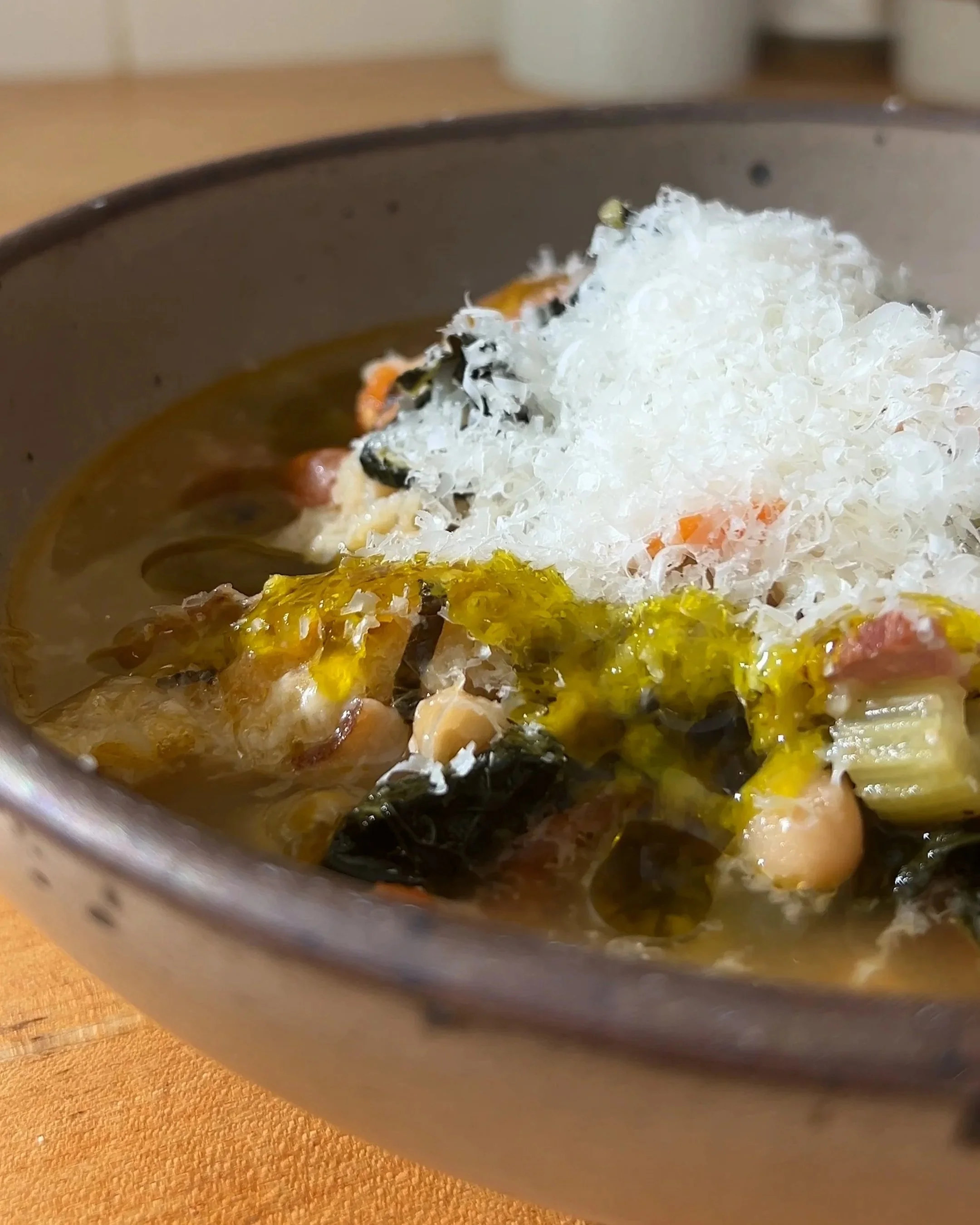
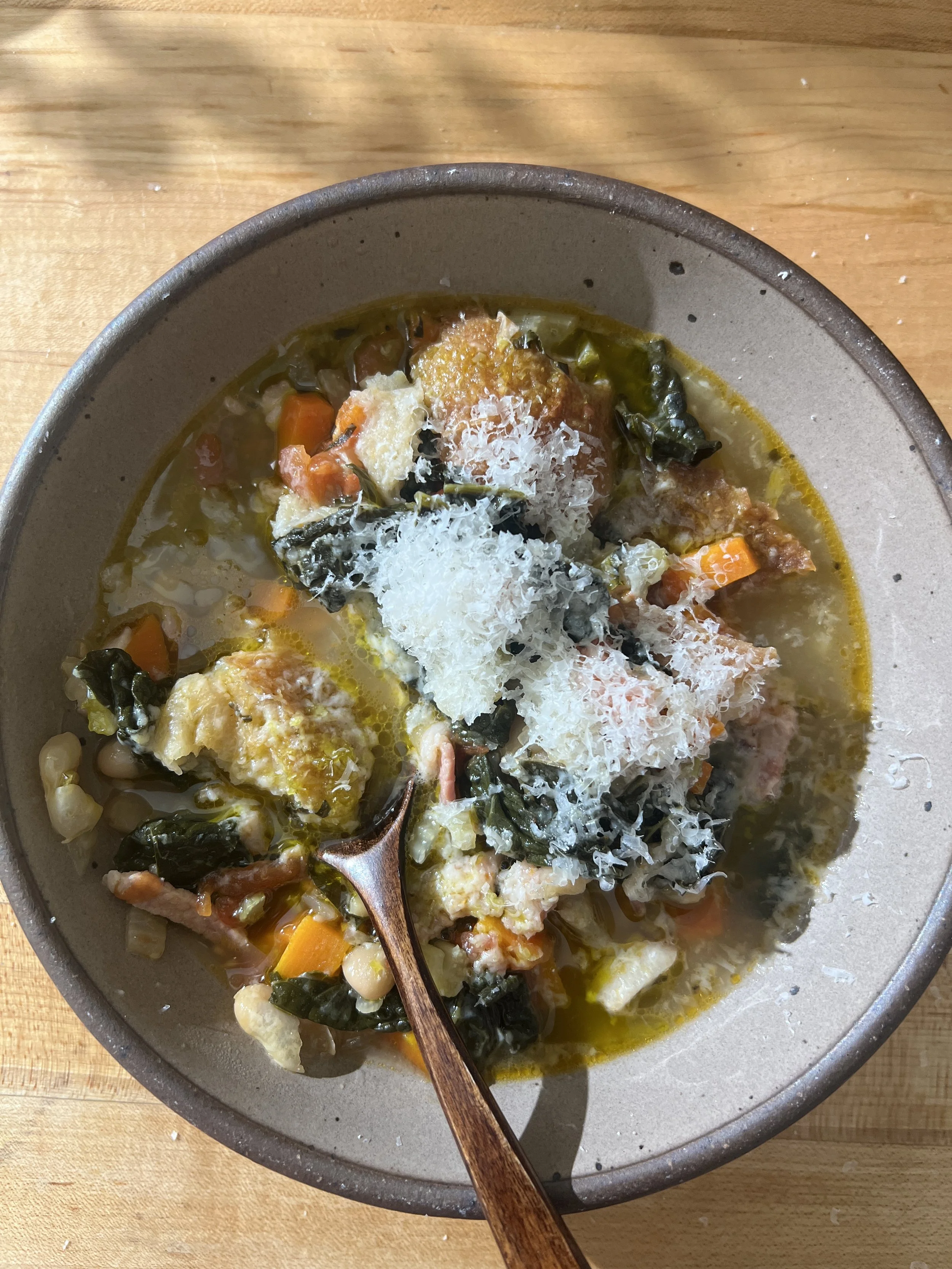
I love finishing ribollita with a generous amount of freshly grated Parmesan, a swirl of good extra virgin olive oil, and lots of freshly ground black pepper. And just like its name suggests, it’s even better the second and third day. The flavors deepen, the bread softens further, and the whole pot becomes richer and more cohesive. It’s the kind of soup that truly rewards patience.
This is a simple but very comforting recipe, perfect for the cold weather.. Thank you so much for reading and stopping by. You can also find a video version of this recipe on my Instagram, TikTok, and YouTube Shorts.
Ribollita
Prep time 10 min
Cooking time: 35 min
Total 45 min
Serves 4
Ingredients
2 medium tomatoes
3 stalks celery, sliced ½ inch thick
1 carrot, small dice
½ white onion, small dice
1 bunch kale, ribs and leaves separated
3 cloves garlic, minced
3 slices bacon, sliced ½ inch wide
1 15 ounce can cannellini beans, drained
4 cups chicken stock
2 bay leaves
1/2 teaspoon salt, plus more to taste
Black pepper to taste
2 slices stale rustic crusty bread, torn into bite size pieces
1 tablespoon olive oil, plus more for serving
Parmesan cheese
Preparation
Bring a medium pot of water to a boil. While waiting, score a shallow “x” on the bottom of each tomato and prepare an ice water bath.
Once the water is boiling, gently lower in the tomatoes and blanch for about 30 seconds. Transfer immediately to the ice water bath. When cool enough to handle, peel off the skins. Dice the tomatoes and set aside.
Separate the kale ribs from the leaves. Thinly slice the ribs and tear the leaves into bite size pieces. Keep them separate.
In a Dutch oven or heavy bottom pot, add the bacon and place over medium heat. Cook, stirring occasionally, for about 5 minutes until the fat renders and the bacon is cooked through but not too crispy. With slotted spoons, remove the bacon from the pot.
Add 1 tablespoon of olive oil and add garlic. Once it is flagrant, add onion, carrot, celery, sliced kale ribs. Sprinkle with a generous pinch of salt. Cook, stirring occasionally, until the vegetables soften and become fragrant, about 7 to 8 minutes.
Add the bacon back to the pot. Add kale leaves and diced tomatoes and stir to combine. Add cannellini beans and pour in the chicken stock, and bay leaves. Stir well to make sure everything is submerged. Bring to a gentle simmer, cover, and cook for 15 minutes.
Add the torn bread and cook for another 10 minutes.
Taste and adjust with salt and black pepper as needed.
To serve, drizzle with olive oil and finish with plenty of grated Parmesan and freshly ground black pepper.