Ume Syrup
Ume syrup is a sweet, fruity concentrate made from Japanese ume (often translated as "plum" but actually closer to an apricot) and sugar. It has a bright, tangy, floral flavor with a natural sweetness. It is especially popular as a summer drink in Japan, and once strained, the syrup keeps in the fridge for several months.
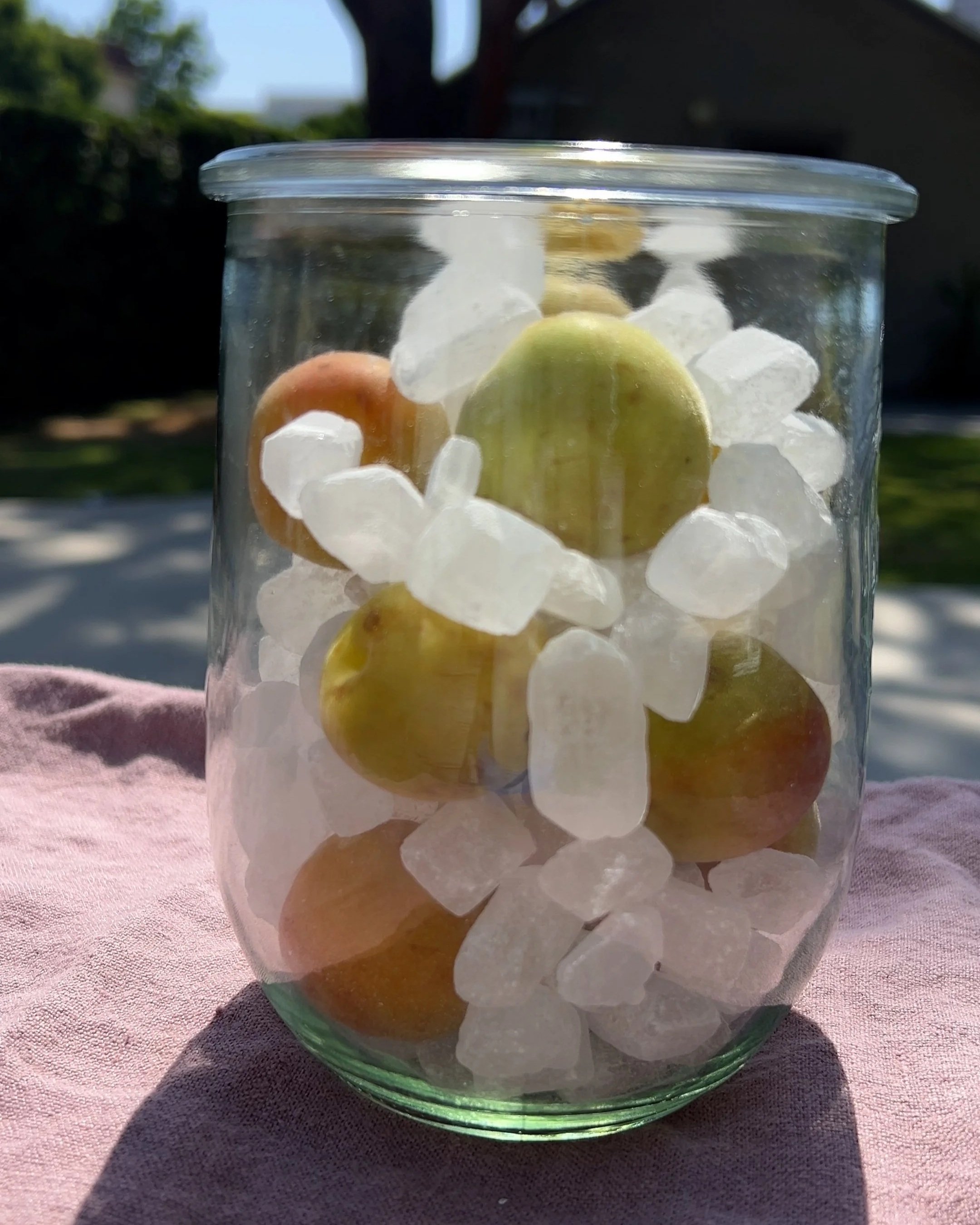
Ume season runs from May to early June, and during this time you can find them at a Japanese grocery store or farmers market here in Los Angeles, where I live. If you see them, I encourage you to buy some right away, because ume season is very short. They may not be there on your next visit. I got mine from a farmers market: green ume for the syrup, and a ripe, orange colored variety called "bungo" for my umeboshi.
For making umeshu or ume syrup, choose green ume so it won't break or burst during the process. If you visit a Japanese grocery store during ume season, you'll usually find large jars and rock sugar sold specifically for making ume syrup, umeshu, and umeboshi. Since I was making a small batch, I used a Weck glass jar instead.
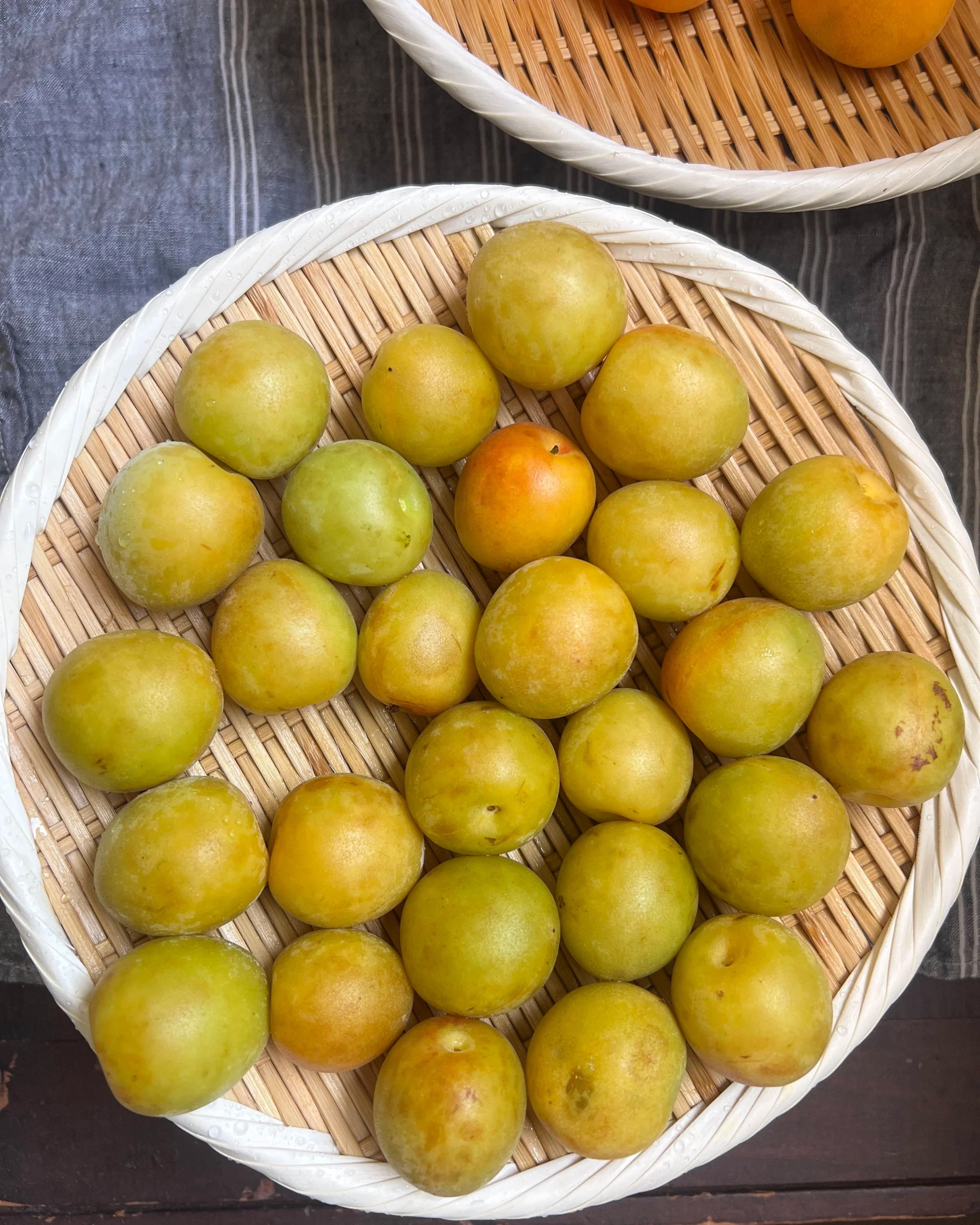
Why Use Rock Sugar
Rock sugar forms large crystals that dissolve slowly, and this slow dissolving is the key to efficiently drawing out the ume's essence. As the sugar melts little by little, the syrup gradually increases in sweetness, allowing moisture inside the ume to escape while its flavor is gently extracted over time. You can use granulated sugar or brown sugar, but if you do, it tends to sink to the bottom of the jar and clump together, leaving some of it undissolved. Rock sugar, on the other hand, distributes evenly throughout the gaps between the ume, allowing the sugar to reach every piece more uniformly.
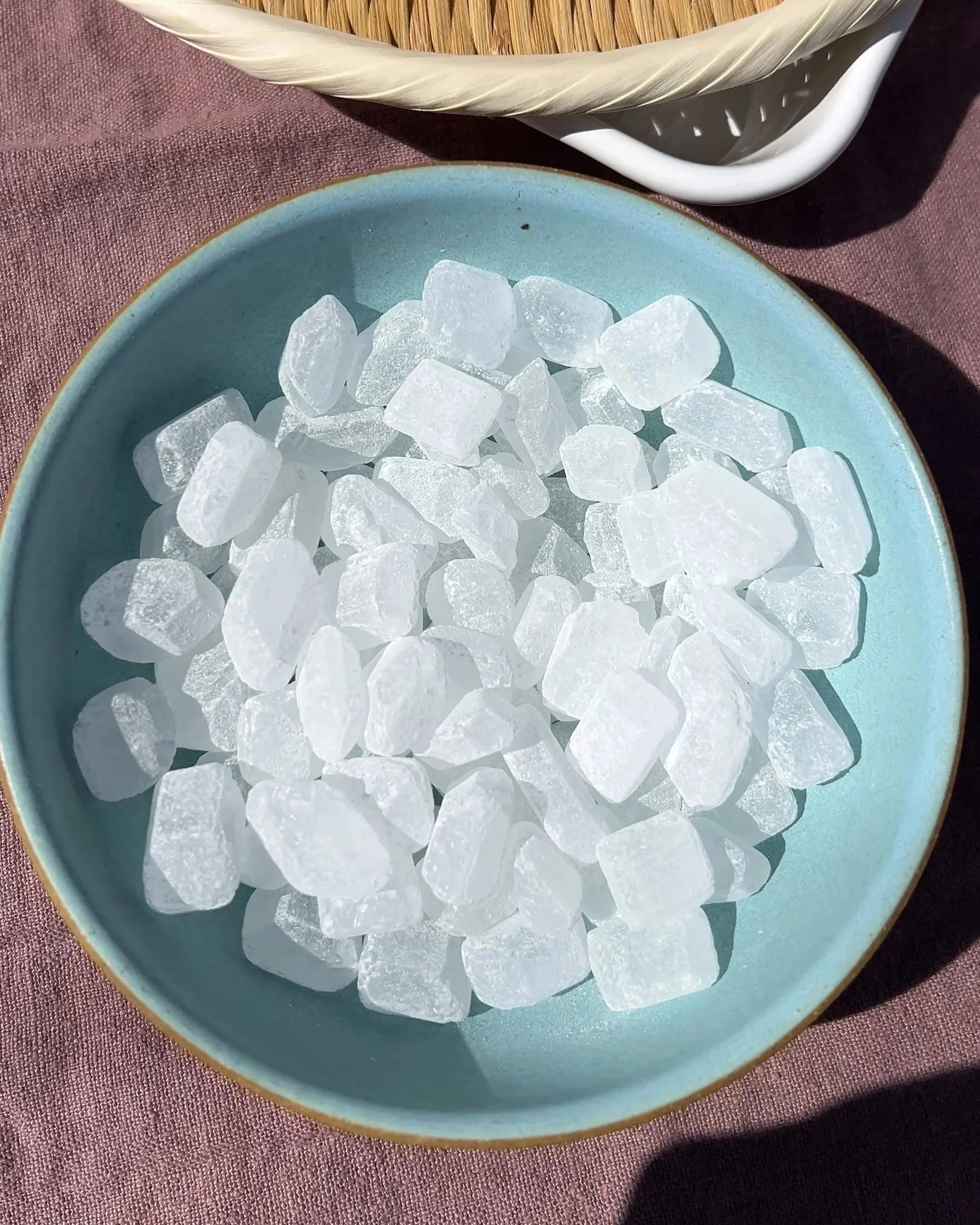
The Science Behind Ume Syrup
When you coat the ume in sugar, it creates a highly concentrated sugar solution on the outside. Water then naturally moves through the semipermeable membrane of the ume's cell walls, traveling from the area of lower concentration inside the fruit to the area of higher concentration outside. This is how ume syrup forms without any heat or added water.
You'll want to shake the jar to make sure every ume stays coated in sugar syrup. If any ume is left uncoated, it can develop mold. So be sure to swirl or shake the jar once or twice a day. If you start to notice small bubbles forming, that means the syrup has begun to ferment. Simply add a tablespoon of vinegar to stop the fermentation in its tracks.
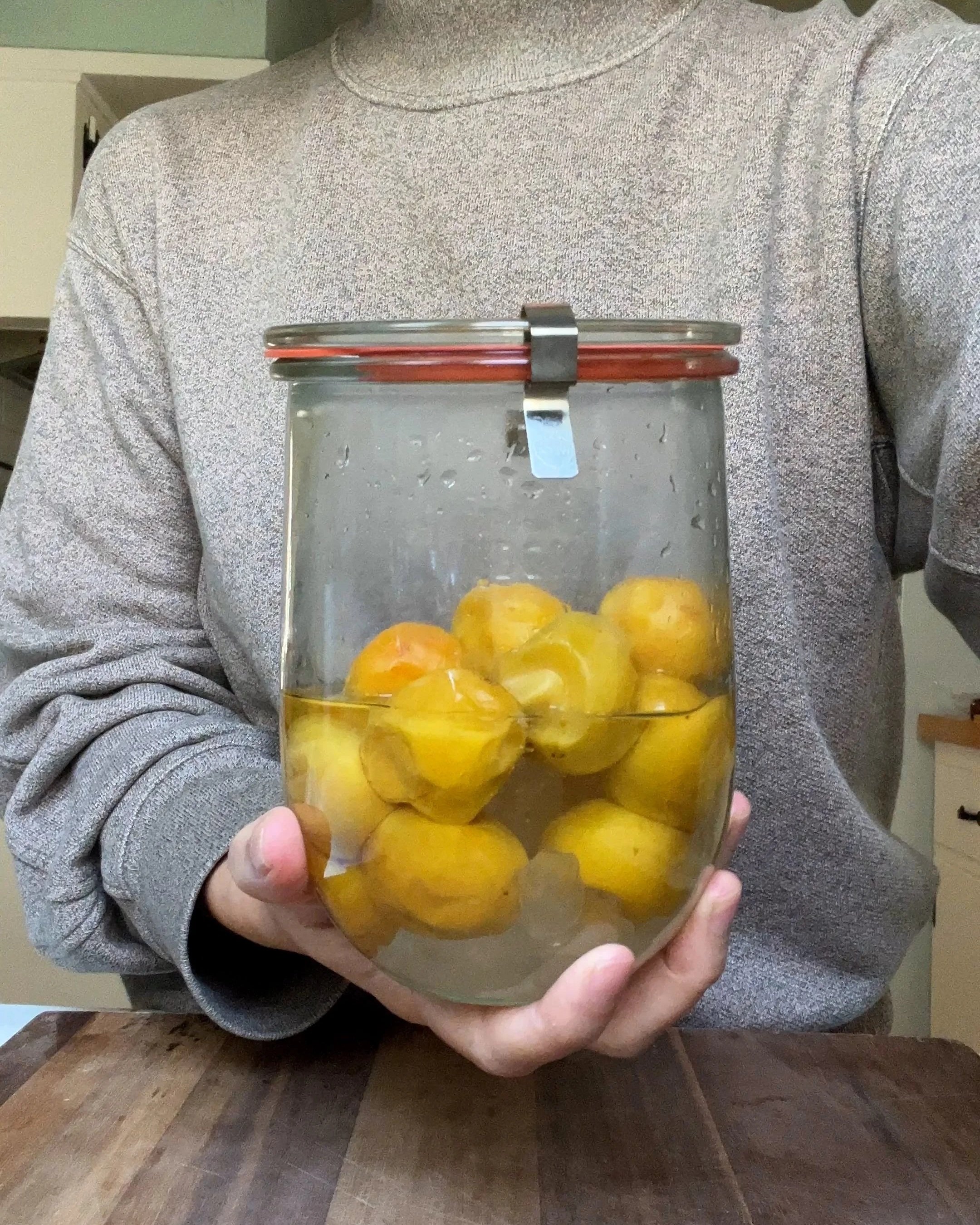
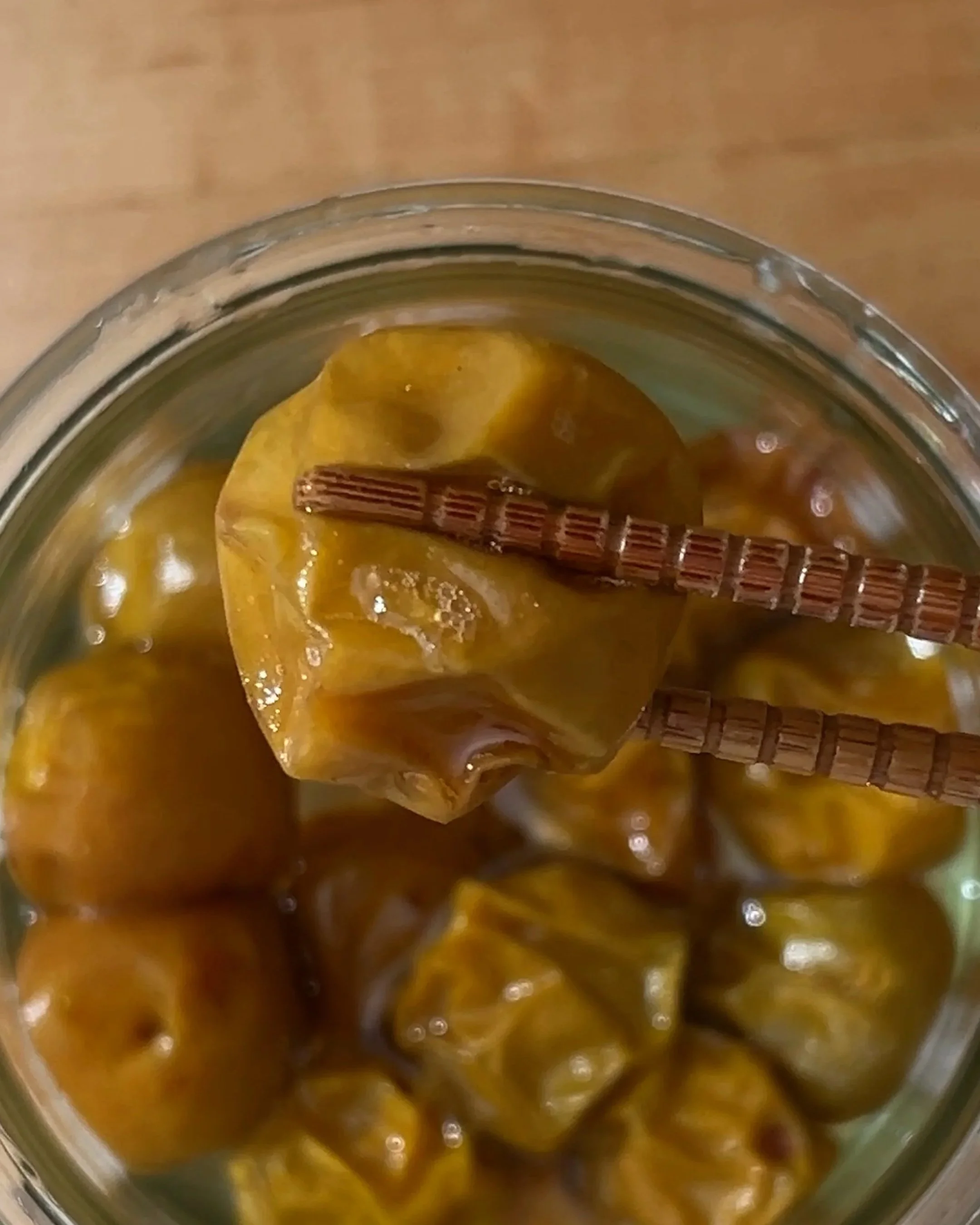
The basic ratio for ume syrup is 1:1, equal parts ume and rock sugar by weight. While it might be tempting to cut back on sugar, this ratio isn't just about sweetness, it's essential to the process itself. The sugar is what draws moisture out of the ume through osmosis, creating the syrup in the first place. If you reduce the sugar too much, there won't be enough concentration difference to pull the liquid out efficiently, and the ume may not release their juices properly. Even worse, a lower sugar concentration creates a more hospitable environment for mold and unwanted fermentation, since sugar acts as a natural preservative here. So while 1:1 may sound like a lot, it's the ratio that ensures both a successful extraction and a syrup that stays safe and shelf stable in the fridge for months.
Ume Syrup
Makes about 1 pint
Prep time 30 min
Total 3-4 weeks
Ingredients
Ume : Rock Sugar = 1 : 1
350g ume
350g rock sugar
Preparation
Wash the ume and air dry, or gently wipe with a paper towel or clean cloth. Remove the stem end with a toothpick.
In a sterilized jar, add rock sugar and ume in alternating layers, ending with rock sugar.
Close the lid and leave at room temperature, away from direct sunlight.
Shake once or twice a day to make sure the ume are evenly coated.
Once the rock sugar has completely dissolved and the ume are wrinkly, it's ready. This will take about 3 to 4 weeks. Remove the wrinkled ume; you can save them to garnish your drinks, as they're edible too.
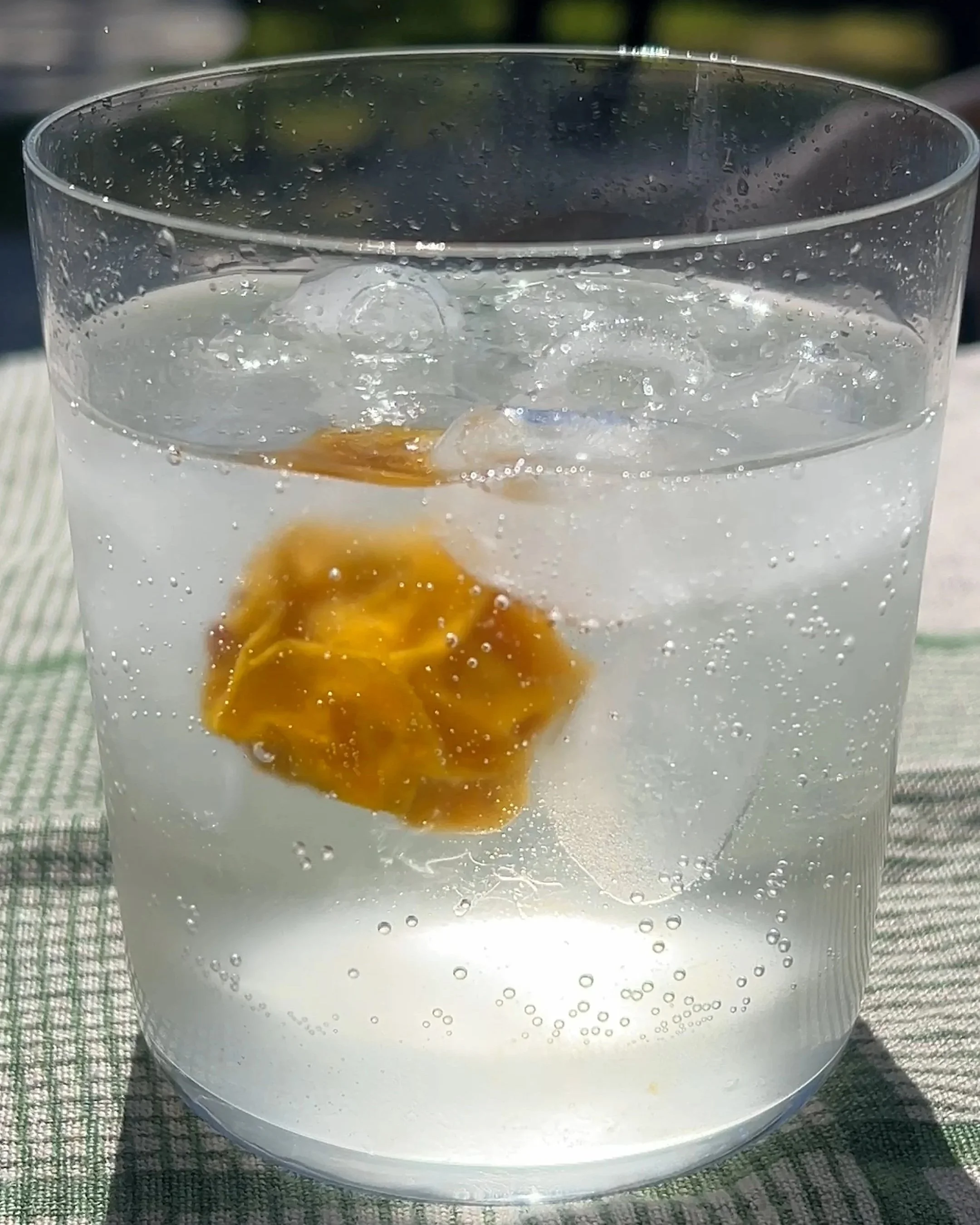
Enjoy mixed with still or sparkling water and ice. I usually dilute it at a ratio of 1:4, ume syrup to water.